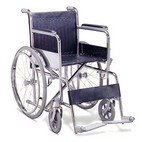






Sunday, 17 September 2023

My Faith Shaken in Canadian Medicine -So What Now?

Oh how I miss those days when your family physician, with his little black medical bag, came to your house when you were sick.  A doctor that got to know his patients and often looking after them throughout their lives.

These days there's a waiting list to even find a doctor accepting new patients.  I've had four doctors in about 5 years.  Family physicians are considered to be standing on the lowest rung of the medical ladder.  Higher pay and prestige lie further up.  Can't fault anyone who wishes to improve themselves but the revolving door reality leaves much to be desired for our healthcare system.

My shaken faith:

  • When in my twenties, four doctors, five if you count an allergist, failed to diagnose my sporadic bouts of rapid heartbeat, profuse sweating, weak and shaky legs, tunnel vision, disorientation and asthma.  I believed I was about to experience an heart attack whenever a spontaneous episode would occur.  I was sedated with Ativan or Valium and given a asthmatic "puffer" for my breathing.  Now I was just sleepy or dopey when episodes occurred.  It wasn't until I read a newspaper article of others experiencing the same symptoms that I could put a name to my symptoms: Panic Attacks.  No doctor had used that term for my symptoms.  A family member gave me some Anafranil (Cloprolamine) and said "take this, it settles my stomach".  I had no stomach problems but at that point I was borderline suicidal and didn't care if I took someone else's prescription.  After only a day, it was as dramatic as the curtains being drawn open to let bright sunshine in on a dark and dusty room.  Symptoms were gone and I could discard the inhaler.  I remained on the Anafranil for several years; a chemical imbalance in my physiology I suspect.  My doctor at that time told me, "we know a lot more about that now."  Too late to have helped me.

  • In mid-2000 I experienced a severe debilitating backache.  I had to hold onto walls as I inched from one place to another.  I left work and came home to crawl into bed.  I wanted to take a shower, but couldn't lift my leg up over the tub.  Oh how I wish I could have and prevented my infection.  I had yet to find another doctor, my most recent physician having left for more fertile ground.  I went to a walk-in clinic where I was prescribed a muscle relaxant, then went back to bed (no urine culture, which might have offered a better outcome).  How many days went by I cannot recall.  I woke up one morning and my legs would not move.  Taken by ambulance to the hospital, an MRI revealed I had a spinal cord abscess caused by the bacterium Staphylococcus aureus. Surgery followed and I came out of the ordeal as a paraplegic.  I can only speculate whether my outcome would have been different if I had my family doctor at that time.
  • While in the hospital, recovering from my spinal infection, I lost hearing in one ear.  At least two doctors, one twice looked into my ear canal with the otolaryngoscope but couldn't seen anything amiss.  So that was that!  I couldn't hear but nothing was wrong.  Once discharged I saturated some cotton with hydrogen peroxide and stuffed it into my ear.  I removed so much "black junk" from my ear canal which doctors couldn't detect.  I could hear again.  My ear had picked up some sort of infection from some hospital fomite (inanimate vector) such as a pillow.
  • The most recent episode which continued to shake my faith in the Canadian medical system is described in the three previous posts.  In April of 2022, I experienced severe spasms in my right leg which sprained to to such a degree that it would no longer support me in standing or transferring or more importantly, in stepping into our family vehicle as I had been doing for the previous fifteen years or so.
  1. Doctor No. 1, who I found after a year's search after having moved back to my hometown.  He told me all I needed was rest - which was what I had been doing all winter up til this April episode.  I went home and rested.  I did recover to some degree but not to what I had pre-April, 2022.  The strength, stability and tautness did not return allowing me to get into our family vehicle.  My limited independence is now all but non-existent.  I have to rely on disability transport.
  2. Doctor No. 2: Doctor No. 1 left after about a year and a half with no one taking over his practice.  He had left me with a years worth of repeat prescriptions which was about the time it took to find another doctor.  At the "meet-and-greet", I explained my April episode to the new physician.  He ordered an EMG [meaningless without a baseline to compare it to - a before and after to see what changed] and an MRI [something specific diagnosis in mind or just grasping?]  The EMG was scheduled for early the following year (2023) and just about that time I received and e-mail informing me that he was leaving his practice; he was handing his practice over to another doctor.  [The EMG result confirmed that I was a paraplegic and nothing more.  Waste of my time and the taxpayer's money.
  3. Doctor No. 3: At the meet-and-greet, I was interviewed by, I assume, was a clinical assistant - prior to meeting the doctor, or so I thought.  No, that was it.  I've not met my new family physician yet though I've been to his office twice.  I did hear from him though,  When the previously ordered MRI result came in he phoned me with the result.  I had previously heard from the Osteopath? or Neurologist? or their clinical assistant? who gave me a summary of the MRI results:  I needed immediate surgery for a bone spur which was causing my spasms and I could continue to take my Gabapentin [nerve pain] and Baclofen [anti-spasmodic].  Huh, did you not read my chart to see that I'm a paraplegic and am on those two prescriptions for life [or miraculous biblical intervention].  Were they misreading my original injury for a new problem?  I discussed this with Doctor No. 3 by phone and he patiently listened but I don't recall him challenging my assumption.


And so after hanging up I'm left wondering: Do I really have a bone spur causing additional problems.  Do I need surgery?  Was I misdiagnosed?  Will I ever meet my new family physician or will all diagnoses and results be offered by phone?

At the time Doctor No.2 ordered the EMG and MRI he also sent me to a plastic surgeon regarding my finger contractures and to an orthopedic surgeon for torn tendons in my shoulders.  The plastic surgeon injected one finger with cortisone and ordered additional x-rays and ultrasounds.  After a half a year or more, I have not heard back from their clinic. nor my new family physician regarding the results - prognosis or possible treatment.

As for the torn tendons in my shoulders, I was examined by the Orthopedic surgeon and his assistants and told there was nothing they could do for me.  I asked therefore if I should just learn to live with the pain?  The doctor then asked me my age.  I told him.  He just smiled at me.  The only way I could interpret his countenance was that I was close to death anyways, so why bother...

The summer of 2023 has for me been the summer of medical tests.  Yet no issue has been resolved and there is nothing more on the horizon.  I guess it's up to me to raise my fists and beat on their doors to do more to find out what ails me.

I won't even get into how the Canadian medical system hastened my dad's death.  I've relayed it elsewhere in this blog.

*   *   *

Friday, 8 September 2023

What Happened -Part 3

 A summation of the previous four posts:

Ever since my spinal cord injury some fifteen years ago, I was able to climb into our family van from my wheelchair for transportation to wherever I needed to go.  In fact I last did so in the last week of March of 2022 when I visited my out-of-town dentist.

Then, on April 6th & 7th of the following week, I experienced excruciatingly painful, explosive spasms which lasted all night till dawn with only a slight reprieve during the day before they resumed again the following night.

The spasms were so intense and devastating that I could no longer place my weight upon the leg for support during transferring.  I could lift my left leg upright and hold it taught; the right leg would sag and bounce when trying to do the same.

Here lies my frustration with the Canadian medical system:

I am now on my fourth family physician in five years.  I left my previous physician when I moved back to my home town.  Family physicians accepting new patients are rare in Ontario Canada - with some wait lists as long as five years.

Doctor No. 1 (2019-Summer 2022): Though some distance from home, I found a doctor accepting new patients.  I was with this doctor in April 2022 when my debilitating spasm event occurred.   He told my all I needed was rest but ordered an ultrasound to humour me.  I showed no abnormalities and the leg slowly did recover but not to pre-April capabilities.  I tried but could not raise my left leg while balanced on the wobbly right leg, high enough to step into the van.

Just when I was about to approach him again, I received a letter in the mail telling me he was closing his practice as there was no candidate willing to take it on.  I left my name with the clinic should events change and then the search was on again.

Doctor No. 2: (January 2022-May 2023) I received a call from the clinic that a new physician had arrived and was accepting patients.  I immediately signed up and shortly thereafter went to the meet-&-greet.  I explained my spasm event to the doctor during our initial meeting.  He ordered an EMG and an MRI [along with other tests unrelated to my spasms - trigger fingers, shoulder pain from torn tendon, etc.]  Whether do to the demand or Covid backlog, the tests were scheduled into the following year.  In May of 2023, some four months after establishing his practice, he decided to leave [for personal reasons].  There was another doctor at the same building but not with the same clinic who was willing to accept Doctor No. 2's patients.

Doctor No. 3 (June 2023-?): So I go to my third meet-&-greet for my fourth doctor in almost five years.  But I don't meet the doctor; I meet who I presume was a medical clinician for the doctor.  They listen to my gripes and take my notes [which will be scanned into their black hole, never to see the light of day again.  They suggest I meet with another doctor in the same office who manages pain.  When the time came to meet this pain doctor No.4, I meet with the same clinician.  So I have yet to meet my new doctor(s).

Results ordered by Doctor No. 3 began to come into his office. Negative results are not called but I finally did hear the voice of Doctor No. 3 when he called regarding the MRI. The hospital's neurology or orthopedic doctor's clinician had already contacted me regarding the MRI results, telling me that a bone "spur" was causing my spasms and that I needed immediate surgery. They continued by telling me that I should keep taking the bacolfen for spasms and gabapentin for nerve pain. That left me wondering if I really had a "spur" or whether they were misreading my original injury as something new. When Doctor No. 3 called, I explained my reasoning to him which he took in and didn't challenge.

The more I think about it, the more confused I become.  Was there something new and abnormal in that MRI?

I guess it's up to me to make another appointment and pound on the good doctor's door [or his clinician's] for I still am housebound and unable to get into your family vehicle.  Something suddenly happened to me in April of 2022 which robbed me of my ability to get into our family vehicle; the problem remains.  Though not solved, it appears Doctor No. 3 had dismissed my medical complaint and it's up to me to continue to raise a stink.  (Oh, you were serious about that issue?)

I remain housebound, having been off my property some thirteen times in the last seventeen months (since April 2022 to present) and all for medical or related appointments.  All trips were by public disability transit.

And so it goes....


Monday, 4 September 2023

Disability Transportation

 As mentioned in the previous post, since my massive spasm episode in April of 2022, I suddenly lost the ability to step into our family van for trips away from home.

As such, I have been off my property only 13 times in the last 17 months, as of September 1, 2023, and all trips were by the local disability transport, and all were for medical, or related (pharmacy flu/Covid) appointments.

I have not left my home for entertainment, to shop, meet friends or to enjoy a meal at a restaurant.  Nada! 

Local disability vehicle

There lies another problem.  Perhaps it's the staffing shortage - the employment lethargy which appears to have resulted from Covid.  People no longer wish to return to work after the pandemic viral slowdown or downsizing.  Perhaps it's the manner of the job.  Their paycheck perhaps not compensating sufficiently for their stressful work.

Though not highly skilled work, it does demand a compassionate, tolerant, flexible and even-tempered worker, whether a driver or dispatcher.  Clients may miss scheduled rides with routes and timetables constantly juggled and readjusted.  Clients can be in pain, can be surly, exhibit anger and frustration; they may require special attention, etc., etc.  How do the hire and retain competent staff?

The earliest the local company allows me to book a ride is seven days in advance.  I had a MRI scheduled in a year's time and was unconcerned about getting a ride to the hospital.  Perhaps I would have recovered sufficiently to be able to again step into our family vehicle.  So the week finally approached and in the early morning of the seventh day before my MRI, I attempted to book a ride to the hospital.  No luck.  All booked up. Many clients have booked "permanent" rides such as those who have perpetually ongoing trips to dialysis clinics for weekly treatments.  Others have full-time jobs and have booked up daily trips into work and home again.  The slots are quickly filled up.

One bus driver told me that city hall has cut funding for disability transport even though the "boomers" are getting older and living longer with age related issues.  Perhaps the city councilors have no relatives needing assistance - or have no compassion.  Can funding really not be found?

Well, I did get a ride to my MRI by constantly selecting an earlier time period for ride to the hospital.  I found a slot two-hours before my appointment.  I would read a book while I wait.

Another time I was placed on a "wait list" to see if someone cancelled their trip in a time-slot closer to what I needed.  No one did.  One is faced with having to cancel long-standing appointments or to hire a private taxi at a substantially higher cost, to get one to where they have to be.  This adds significantly to one's stress.

At present, I have no alternative.  I'm grateful the service exists but it's inadequate.  I choose not to use it for frivolous trips - to shop or for entertainment, hopefully leaving the service for those who truly need it for medical concerns.


Monday, 14 August 2023

Frustration: What Happened to Me?

 Part Two:  What Happened?  Some Improvement.

In the previous post I wrote about the massive spasms I endured on the nights of April 6th & 7th, 2022.  So devastating that the night-long spasms attempted to tear my right leg from its hip joint.  My left the leg was so sprained from the repeated contractions that it would collapse beneath me if I placed any weight upon it--particularly if I tried to swivel upon it, suggesting the piriformis muscle may have been involved.

Though I could step into our family vehicle the week before, I could no longer do so a week later--or now months later.  Winter lethargy could not account for it as I had been able to step into our vehicle for the last 15 years or so.  Old age too does not descend from the heavens to land upon one in a weeks time.

My family doctor at that time told me it was nothing serious and that I should just rest, though I had rested all winter.  To humour me, he sent me for an ultrasound which, as I suspected, showed no abnormality.  

While strength in that leg did slowly return over the next couple of months, my flexibility and in particular my stability did not return to the pre-April 2022 event level.  That inability became compounded by self-doubt to such a degree that I fear making more attempts to get into our vehicle, proving that I cannot.

Just when I was about to once more contact my doctor, I received a letter in the mail stating that he was leaving his practice and there was no candidate available willing to take over his practice.  He was kind enough to provide me with a year full of prescription renewals prior to leaving.  I had this doctor for less than a year and a half.  I left a request with the family group practice that if a new doctor joined their clinic and accepted new patients, to please contact me.

It was almost a year later that I received a call from the clinic that they had a new doctor,  I went to the "meet-and-greet" and repeated my "April" story.  The doctor booked me for several tests, some related to my "April" episode.  This was at the tail end of Covid and with backlogs or usual long waits, the tests would be the following year.

I had been scheduled for an EMG test (Electromyography) to detect nerve, muscle and related signal transmission problems.  I wondered what this test was supposed to show for, as far as I know, there was no baseline taken after my initial injury which resulted in paralysis.  One would have to compare the "after" to the "before" to see what had changed which may account for my recent problems.  The Neurologist looked at the results and in essence told me that I was a paraplegic.  Oh, so that's why my legs haven't worked for the last fifteen years or so.  Thanks, that explains it!

 I was also booked for an MRI (Magnetic Resonance Imaging).  I can only speculate as to why he ordered this expensive test.  Did he have something in mind or was it just a shot in the dark.  My layman's reasoning had me thinking that a problem at this level would remain or worsen but not slowly improve (though not to my original ability).

The results from tests ordered by this doctor had yet to come in when I received an e-mail this time informing me that my doctor of about five months was leaving his practice.  I had met him only once at the "meet-and-greet" session when he placed these orders (though I did meet him before his departure to go over the EMG results.  He concurred with my observation, that there was no baseline to which the new results could be compared.  The test told him nothing,

However, this time around, another doctor was prepared to pick up his practice.  I received an invitation for my third meet-and-greet session for my third of four doctors in less than five years.  In fact, I didn't meet the doctor but was interview by his clinical assistant.  So much for cultivating a rapport with your family physician.  Find any doctor accepting new patients and hope they remain long enough to see them twice.

Well, finally I received a phone call from what I gathered was another clinical assistant with the MRI results.  I was told I had a bone-spur which was causing all my spasms and that I should be booked for immediate surgery.  I was told to keep taking my baclofen (spasms) and gabapentin (nerve pain).  Keep taking them??  Did they not read my intake notes stating I was a paraplegic and would be on these two medications for life (unless something better was developed).  A bone spur?  Bull-sh*t!

My new family physician, (4th in 5 yrs) also phoned me with the results.  I had yet to meet him but he spoke at a moderate pace and most of all, he listened.  I told him my doubts regarding the MRI interpretation.  Was the MRI doctor (neurologist?) misreading the healing of my original spinal injury for some new problem or did I actually have a bone spur?  My new family doctor did not act on the MRI results forwarded to him leaving me to believe that I was correct,  The MRI was misread.  No bone spur; no operation.  At least that's what I currently understand.

That's how things now stand.  I've not recovered to pre-April 2022 levels of strength, stability and confidence.  My family doctor had not ordered any follow-up tests or procedures to get to the bottom of what really happened that April and what, if anything can be done to improve my ability.  He's made a stab at it and with negative results; I suspect he's willing to drop it unless I demand more.  I suppose it's up to the patient these days to keep returning and pounding away at the clinic door, demanding new tests in order to answer "what the hell happened to me."  ["Oh, you still want me to diagnose your problem?"]

The bottom line is this:  For the last fifteen years, previous to April 2022, I was able to roll up to and step into our family vehicle.  My wife would drive me to wherever I (or we) wanted to go.  After April 2022, I could no longer step into our vehicle.  As such I am dependent on local disability transport which comes with its own set of problems.  The result is that I have been out of my house (off the property) only twelve (12) times in the last 16 months (over a year and a half) and all the trips have been for medical appointments.

In my home I have access to four rooms: my bed room, living room, kitchen and bathroom.  I try to minimize the time I spend in the last two.

Quality of life has taken another tremendous hit.  More on this to follow.


Tuesday, 8 August 2023

Setback: Okay, what happened?

Part 1: Okay, what the heck happened to me?

Covid was waning and life was beginning to return to normal.  I had been vaccinated--twice, and never did catch the virus.

I had broken a tooth which necessitated a trip to my out-of-town dentist on March 31, 2022.  So I transfer to my manual wheelchair and roll up to our van.  I open the door, grab the hand-hold on the frame, haul my leg in first followed by my bottom.  I close the door; wife folds up the chair and places it in back, and we're off.

My dentist of some 30 years is accommodating.  I roll up to her bench and step over to it so that the repairs can commence.  It's the reverse going home.  Simple, no?

Less than a week later on the night of April 6th, 2022, I suddenly get such severe spasms that I think the devil is trying to dis-articulate my femur from my hip socket.  I scream not only from each unexpected explosive action that tries to take my right leg further than what is anatomically possible, but also the resulting pain.

Again, and again, and again - every 15 to 20 seconds or so the excruciating contraction repeats.  A contraction so strong that I cannot push my right knee down with both hands and all my might to straighten my leg until the spasm releases.

My wife hears my cries from another room. - I swear at God, the devil or to any other entity who might listen--that I can blame--that I can plead for sympathy, for relief.  Nothing...

This goes on until dawn.  I'm exhausted.  I get up and have coffee for what else can I do?  Dawn seems to have brought some relief.

April 7, 2022:  The nuclear spasms return in earnest the following night.  Explode, scream, release, swear, then repeat til dawn.

You've heard of suicide by cop, have you not?  I was trying suicide by God. I swore and insulted God in the most vile manner--even inventing new words for I had used up my most filthy vocabulary -words which would make a long-shore-man blush, and still found them insufficient to get my anger, my desperation, my helplessness, my hopelessness across.  Perhaps in his anger he would take me, but to where?  I was already in hell.  How much worse could it get?  Would four flaming horsemen of the acropolis apocalypse ride their steeds up my ass or would I just have to clean Hitler's latrine for eternity.  End it, please!!!

April 8, 2022: There was no repeat of the previous two nights.  Oh, I still get spasms nightly but they are gentler--like trying to kick the ceiling light fixture from where it had been installed.  Those destroy me as well, but they take longer - like trying to blow your brains out using a hair-dryer.

The result was that my right leg was absolutely sprained.  I could no longer raise it of the ground.  While my left leg raised straight in front of me could stay rigid and taut, the right leg was sore, sprained and would bounce when I attempted to raise it.

I could not put weight on that leg to transfer to my bed, or to the toilet or to any other surface.  It would collapse beneath me.  I had to slide across, drag myself over or devise some other means to change surfaces.

My doctor offered sympathy but no possible explanation for my episode.  He told me to go home and rest.  Go home and rest!! Well doctor, that's what I had been doing all winter long.  Winter lethargy doesn't materialize in one week--between March 31 and April 6.  Old age too does not drop out of the sky overnight.  My doctor sent me for an ultrasound to humour me.  It showed no abnormalities as I suspected.  He was off the hook.

Well, the leg did improve to some degree but I could no longer raise it high enough to step into our van.  I would lift my leg up and immediately fall back into my wheelchair.  Had more damage been done than I (and the good doctor) realized?  Had I just lost my confidence?  What?

More to follow in the next post.


Saturday, 14 August 2021

Still Alive

 Still alive but distracted by life.  May post again soon when the spirit permits.

Y.

Saturday, 5 December 2020

A Tale of Two Ceilings

Ceilings torment me.  I can recall the day that the doctors entered my hospital room and coldly announced that I'd never walk again.  After they departed, I was left alone with my thoughts.  Laying on my back I found myself staring at the ceiling.  So as to not dwell on the depressing news, I started counting the random perforations in the ceiling tiles.  When I lost count, I'd start again, and again....  That little act of insanity was keeping me sane.


So I slowly recovered and made progress but never recovered the ability to walk.  I could still stand if braced and supported, but that ability only goes so far.  I remain a prisoner of my wheelchair.

In the subsequent years I accomplished a great number of tasks which I was told I would be beyond my ability.  Still so many more were out of reach for my world was now within a "bubble" where I could independently go only so far left or right, forward and back and up or down.  As a proudly independent person, that loss was the most devastating of all.

Having moved to a new house several years ago, I decided to redecorate.  While I did paint the walls and most of the ceiling, I wasn't able to get close to the light fixture with the paint-roller (on an extender).  No matter, I would get it when the light fixture was exchanged for another.

My friends and family always offer help but it is on their timetable.  I'm impatient and want to accomplish tasks immediately when I see them calling out for service.  "We'll do that later," "not now," or "leave that for another time" annoys me for I found out long ago that if something is out of sight, it is also out of mind.  Another time may never come.  Repeated pleas for help often are deferred and chores remain undone.

I am too proud to beg; repeated requests become "badgering"; I have never ordered anyone to do anything, and so I remain quietly frustrated with my own lack of ability to complete tasks which were so easy to accomplish a number of years ago.  I now wait and wait for charitable service when that someone's mind remembers and the their body is willing.

So now I lay in my new room--freshly painted some three years ago, and stare at a different ceiling.  There was no time allowed for me to finish painting the small area beneath the previous light fixture.  "We'll do that later."  I was grateful that my friend exchanged one light for another--his dirty hand-print on the white ceiling reminds me daily of the help he extended.

 
 Arrows point to hand print smudge and beige halo around light fixture.

Nightly, I look at that beige halo on a white ceiling which encircles my light and find it a reminder of my inability to accomplish so many of even the most simplest tasks.  I doubt it will ever be painted in my lifetime.  How can such a small thing be so devastatingly depressing?

*   *   *


Sunday, 13 September 2020

CPAP Cleaners - Marketing 101


While sleep disorders such as sleep apnea are not a "disability", but rather a condition or an affliction, or what have you--I thought I'd add my two-cents worth regarding the unnecessary hefty expense ($$$) of a CPAP cleaner on your wallet or the generosity of your insurance plan.  As of late, several brands have been forcefully marketed via television commercials.

Marketing 101: Increasing Sales: Make people afraid of something, then sell them an item or service which you insist will alleviate their fears.  This sales technique also works well in politics.

As a former microbiology laboratory technologist, I watched fellow Canadian William Shatner hawk a CPAP cleaner on television.  A good money-making opportunity is never lost on competitors and imitators.  Soon rivals began to promote their version of the expensive and unnecessary item.

What is a CPAP?  It stands for Continuous Positive Airway Pressure and is a device which supplies air under increased pressure, theoretically keeping organs of the throat from collapsing and blocking the airway.  When this occurs, the person may stop breathing for a number of seconds leading to oxygen derivation which, as you can imagine, may have serious consequences.  By gently blowing air down the nose and windpipe, most commonly via a mask which the user wears, the airway is kept open and theoretically results in a healthier and more restful sleep.  Surgery is another remedy but understandably it is less popular than strapping on a CPAP mask at night.


 Why do I claim it is unnecessary?  Think about it logically.  What is the source of the air the CPAP uses to blow down your windpipe?  It uses the same household air which you breath all day long before donning your mask.  Most CPAP units, if not all, have a pre-filter which cleans the dust, pollen and other particulates fro the air prior to sending it through a hose to the mask under the increased pressure.  While this is not a HEPA (High-Efficiency Particulate Air) filter which would filter out bacteria and viruses, it serves to make the air somewhat cleaner than that which you breath daily.

Most CPAP cleaners have a water reservoir which when filled with sterile distilled water, moistens the air so as to not dry out the users upper respiratory tract during operation.  Water condensate may be present in the hose after use, however, this vapor condensate is a poor medium to nourish the small amount of non-pathogenic environmental bacteria which may have made it pas the filter.  Remember, these are the same environmental bacteria which you encounter in you home on a daily basis, regardless of the amount of cleaning and scrubbing you perform.

When I first watched the television commercial for a leading brand of cleaner, I almost doubled-over in laughter watching the dramatization of a fellow vigorously shoving some sort of pipe-cleaner repeatedly down the hose in an attempt to scrub it clean.  I swear he appeared to be raising a sweat as his elbow pumped repeatedly like a piston in a revving engine.  If your CPAP tub is so soiled--if your CPAP tub is filled with fecal coliforms, then perhaps you're strapping the mask over the wrong orifice and you should re-read your manual!

"If your CPAP tube is so soiled--if your CPAP tube is filled with fecal coliforms, then perhaps you're strapping the mask over the wrong orifice..."

As a microbiologist, I cultured the entire inside length of several CPAP tubes* after weekly use and found very low numbers of common environmental "dust" bacteria such as several Bacillus species as well as Staphylococcus epidermidis and related non-pathogenic Staph species.  The face mask proved to have similar non-invasive common skin bacteria such as Corynebacterium species and Streptococcus viridans.  Unless severely immunocompromised, these should not be a cause for concern for the user.  Those are the same bacteria you commonly find in your home and in your nose and on your face.

However, some diseases such as Cystic Fibrosis result in the colonization of more hardy bacteria such as mucoid strains of Pseudomonas aeruginosa or coliforms such as Klebsiella pneumoniae.  If afflicted with CF and a CPAP is recommended by your physician, more frequent and thorough cleaning of the unit may be warranted.  Again, the commercial cleaners will probably not be up to the task.  Link: CPAP information for those with Cystic Fibrosis.

How to Clean your CPAP Hose & Mask:

Submerse the hose in a bowl full of soapy water and allow the solution to touch all surfaces as it runs through the interior.  The same soapy solution (dish detergent, or better yet, a hypoallergenic skin wash) can be applied with a damp washcloth to the face mask nightly before use or even once a week if your ambition so dictates.  Rinse all with clean water afterwards.

Too hard to periodically rinse with a soapy solution?  The leading CPAP cleaning unit sells for $399 dollars Canadian ($295 U.S.).  However, the drain on your wallet doesn't end there.  It is recommended that every six months, the user replace the Cartridge Filter Kit which retails for $40 Cnd.

So, how does the CPAP cleaner claim to clean the CPAP unit?  It exposes the surgacesto what it calls "activated oxygen" which is in fact, ozone.  While ozone does have antibacterial properties, the FDA claims commercial CPAP cleaners cannot achieve the level of ozone necessary to effectively kill the bacteria.

Apart from not being effective,, the odour of ozone may be retained by the hose/mask and must be flushed from the unit by those who find it offensive.

Other manufacturers use ultra-violet light (U.V.) as a source of sterilization.  U.V. light may be adequate for surface sterilization, however, it has poor penetrating properties and organisms must be exposed to the source for an appropriate length of time to be bactericidal.

In their own words, the FDA reported that devices claiming to clean, disinfect or sanitize CPAP devices or accessories (such as masks, tubing, headgear) using ozone gas or U.V. light are not legally marketed for this use by the FDA in the U.S. According the the FDA, it is unknown if these CPAP cleaners are safe and effective.

I am not a doctor and am not recommending any particular action.  It is up to the user to decide what they are willing to do or to spend in order to feel safe.  I simply wish to share my microbiological experience with CPAP units.

Any commercial broadcast on TV, seen in print or found on the internet, can be broken down and explained in ten words: "Send me your money and your life will be better."

*I no longer have possession of my study and won't further bore the reader with recalled specifics.

*   *   *


Saturday, 25 July 2020

Chair Etiquette


Where were you raised?  Pick-up after yourself.  Put it back when you're done!  All common pleas from frustrated parents, particularly exasperated mothers.  By the time you reach adulthood you should have learned a few lessons--neatness and orderliness among them.

While enjoying a cup of morning coffee under this morning's sunrise, a good friend dropped by to join my on the patio.  Pulling a chair from under the patio table, he planted himself firmly before enlightening me to the recent events which had transpired in his semi-quarantined life.

Our chit-chat slowly tapered off until exhausted.  Screech...the chair pushed back and turned askew as my dear friend rose to continue his day.  And there the chair remained--where his posterior had deposited it--nowhere near the table from whence it came.


I was reminded of the daily battles I fought with lunch-room chairs at my workplace before my retirement.

The fact that I was disabled could not have escaped others present--imbibing on their morning cup of java or chowing down on the meager cafeteria offerings.

As a group from one department or another rose in unison to return to their daily travail--their chairs pushed out in a row askew--facing this way or that, some further some nearer.  Deposited like mines in the channel, they sat in wait of my attempt to sail my wheelchair through the course their recent occupants had laid.

My colleagues were no better.  They stood likewise and with nary a look back at what was preventing my motorized butt from keeping up.  They just danced they're serpentine do-si-do dance, weaving in an around the chairs as they made for the dance-hall exit.

As I approached each abandoned chair I had to stop, reach out with both hands to lift and shove the chrome and fabric monstrosities from my path and return them one by one to the table to which they belonged.  With order in my universe thus restored they could now be photographed for display in an Amazon sales ad and I could be on my way.

People, when you finish your lunch, don't leave your mess on the table for others to deal with.  Deposit it in the refuse receptacle provided.  Mothers using the drop-down baby change tables in public washrooms--return the table to the folded upright position so that it does not block by entry to the washroom.  Unless disabled, don't park in disabled parking spots (laziness is not a valid disability!)  And please people, put your chair back from where you got it even if there are no disabled persons in your workplace.  It is just common courtesy and do your mother proud.

*   *   *

Friday, 10 July 2020

Lost & Found


About one year after receiving the Quantum Edge power wheelchair, I can say that I'm quite pleased with the model.  It is certainly a vast improvement over the disastrous Permobil M300 which was in-operational more often than not.

Plastic!  I am no fan of plastic.  Oh, it's a fine product but is used in the wrong place--as a wrong material, perhaps 90% of the time.  Why?  Because it is cheap--yet the savings are not pass onto the consumer but are hoarded by the manufacturer and/or vendor.  Overall, plastic is less durable over time, immediately more fragile and subject to ultra-violet (sunlight) deterioration than comparable light-weight metals--just to name a few properties.

Wheelchair manufacturers use plastic over light-weight metals now more than ever citing cost and weight as justification.  I believe profit is the only motivating factor.

Several months ago, I pulled up to my bedside with the intent to transfer.  As the power-chair approached, the left front caster arm grazed the metal bed frame which just happened to be at the appropriate height to pop the plastic cap to the caster pillar like a bottle-opener to a bottle cap.  Off it flew.  I could hear it pop but I could not tell to where it flew.

So I retrieve a mop and sweep under the bed.  Nothing.  I check the other side of the room--perhaps it rolled in the opposite direction.  Nope.  Under the book case?  Nada.  Ah-ha! I won't get fooled.  It had to have flung back into the wheelchair itself.  I retrieve a flashlight and prod all the nooks and crannies with a narrow ruler.  I can't pick the power-chair up and shake it out.  It doesn't appear to be on the chair or foot rest.  I'm perplexed!

That plastic cap had been attached to the caster pillar or post by friction.  The cap is manufactured with a lip, perhaps one-sixty-fourth of an inch smaller than the diameter of the pillar or post onto which it fits.  The assembler places the cap onto the pillar and with a slap of a closed fist or rubber mallet, drives the cap home.  The trouble is that an equal and opposite force just as easily removes the cap as there are no threads or set-screws to secure it to where it has been placed.

After weeks of scratching my head and wondering where the plastic cap had  gone, I gave up.  Perhaps it now resides with Jimmy Hoffa as the concrete foundation of a high-rise or with Amelia Earhart someplace off the coast of the Howland Islands.  Maybe its with the Amber Room and other lost Nazi plunder.  A black hole may have momentarily opened up in my bedroom and drawn the cap into its singularity, never to be seen again.  But life goes on as house-dust, saw-dust, garden leaves and other life's refuse gathers in the cup to keep the caster's retaining nut company the same as the lint which must accumulate in a vagrant's navel.  The "spontaneous breaking of symmetry" as a quantum physicist may note.  I hate that the left side looks different than the right even more than having use forceps, a vacuum or whatever, to keep the dust and detritus from accumulating.

Now this 2-inch diameter plastic cap might have been manufactured with a thimble-full of molten recycled plastic costing one-one hundredth of a penny for material and labour -- plus shipping and handling, for of course we all know from endless commercials that shipping and handling are extra.  Yet I'm certain should I order a replacement, I would be charged perhaps $25.00 for the opportunity to lose it a second time.

So what happened to that cap?  Over the next few months I would find a curious and unidentifiable dark gray-coloured piece of plastic here or there in my travels.  On four largely separate times, the chair suddenly jolted to a stop with a chair icon flashing on my controller--twice forward twice backward.  I still didn't clue in.  Then I found the major segment which comprised the top of the cap--well chewed as if a salivating puppy had found a new play-toy.

The cap had in fact flown back into some dark crevice in the chair and resided there for some time until through bumps and jostles it worked its was down to some hidden [from me] but exposed drive-gear mechanism where it would be periodically fed to the grinding teeth.

So now the chair grins back at me like some boxer who has lost a tooth.  It mocks me in knowing I was outsmarted by a wheelchair...


Just a few of the pieces of the cap left like bread-crumbs leading me to the answer of what happened to my caster cap.


One can see that the cap which covers the top of the caster is missing on the caster pillar seen at the right of this photo.  It covers a large retaining nut which holds the post around which the caster swivels.  Not just for aesthetics, the cap keeps foreign materials and moisture from the nut so the swiveling action is not impeded.

*   *   *  

Monday, 25 May 2020

Government Scrimping on Wheelchair Seating


When I acquired my latest power wheelchair, the Quantum Q6, I requested a seat cushion, a GeoMatrix model which I had once used on a loner chair (while my Permobil was yet again nonoperational) and had found it fairly comfortable.  The cost of the wheelchair and seating combination was partially subsidized by the government's Assistive Devices Program (ADP).

I also purchased a second seat cushion identical to the one I had been using on the Permobil, a Prism Supreme II.  As the government subsidizes only one seat cushion per applicant, I paid for this one fully with my own funds.

I had found that a periodic change of seating contributes to comfort.  Regardless of the cushion's design or quality, prolonged sitting will inevitably result in discomfort.  One cushion may be superior to another in certain situations  

When I received the cushions I noticed my vendor only supplied one seat cover per cushion whereas when I received my seat cushions for my previous two chairs, they always came with a replacement seat cover.  Asking my vendor about this, they replied that the Assistive Devices Program no longer supplies a second seat cover for the seat cushion provided.  "Why?" I asked.  My vendor shrugged and told me the obvious, "In order to save money."  Unless the wheelchair user claims to be incontinent, which I am not, an alternate seat cover is not provided.


Through ADP, I previously received two seat covers per seat cushion so that the used cover could be swapped out for a fresh cover when the other is sent to the laundry.


From my vendor, I now understand that each cushion comes with only one seat cover.  So when the users seat cover becomes soiled for whatever reason (perspiration, spills, and yes, even accidents), one must transfer to some other surface and remain off the wheelchair for however long it takes for the soiled cover to be laundered.  (What if you do your own laundry at a laundromat?)

What a chintzy way of saving money!

Does one have to prove they urinate or defecate on their seats in order to get a second seat cover to use while the other is laundered.  Do you have to have an "accident" on command, or would a note from your healthcare provider suffice?

I suspect that even the most penurious, down & out homeless person has a second pair of britches they could put on while the first pair take a spin in a laundromat or rainwater barrel.


Even those television commercials hawking some product or another shout "But wait!  We'll even throw in this travel pouch to contain your widget, a thirty-dollar value, for free!!!"

There is nothing special about these cloth sacs which should warrant a premium price and therefore what savings could be realized in denying the disabled a second cover?

I'm unaware of other's experiences with seat cushion covers, but my seat covers, two at that, quickly show wear and tear simply form daily usage.  Seams separate, material shreds and zipper's snag.

Something of which I was unaware - ADP does subsidized the replacement of a seat cushion every two years (as opposed to five for wheelchairs).  How long this will continue is uncertain as my vendor revealed that they had heard the government's Assistive Devices Program may be terminated.  I wonder if this is the ultimate cost saving measure?  Would the program be replaced by another, or would the disabled be left high and dry to fend for themselves?  Who among us, even if employed, can afford a $10,00+ power chair every five years or so?  And which wheelchair vendor and repair facility could stay in business if the disabled are no longer able to obtain the mobility devices they need?

I have not confirmed these rumours with ADP itself.


Blake Medical's GeoMatrix seat consists honeycombed gel sheets of select densities.  While the gel itself doesn't breath, the pockets do offer some ventilation particularly when shifting.  A third gel cushion may be inserted for extra weight-bearing capability.  One thing I've noticed is that the gel "pockets" slump forward when going down a steep ramp and offers a sensation that one is sliding off the seat.

My GeoMatrix seat cushion was priced at $621.00 Canadian.

The seat cushion I bought outright (with my own funds) was the Prism Supreme II.  It consists of various density foam blocks, stacked and contoured.

My Prism Supreme II was priced at $459.99 Canadian.

I can buy a full-size living room sofa for the same price.  Somebody must be making a huge profit on these simple items.

I suspect that each cushion has been individually inspected, sat upon and blessed by the Minister of Heath and the prices charged support his/her six-figure salary.

*  *  *


Monday, 18 May 2020

New Power Wheelchair - My Third


Anyone who has stumbled upon my blog may know of the troubles I encountered with my second powerchair--a Permobil.  Problems with that powerchair began almost immediately after taking posession of it, and continued to where virtually all parts of the chair had been replaced, at least once--well before I was eligible for government support in purchasing a replacement.

Since that time I've heard from numerous owners of a Permobil with similar issues and frustrations.  My personal advice is to stay away from this flawed brand!

My first chair was a Quantum, which ran well for seven years, with only one motor (under warranty) and the joy-stick needing replacement in that time period (not including normal wear on the tires.)  It was repossessed by the ADP government agency on my receipt of the Permobil (something to do with the tilt-seat which I really didn't need in the first place).

The Permobil was a nice looking chair and I was assured by the vendor that it was reliable.  I regretted the choice early on.  The curly-cue sides rails do not permit hanging side pockets for personal items such as keys, etc.  The only plus-side to the design of the Permobil I found was that the motors can be disengaged at the front, by the user, rather than at the rear.  This may be useful if you have some use of your limbs, as I have, to maneuver yourself to a more advantageous location during a breakdown.

A sympathetic friend found a used Quantum 300 powerchair which he offered for my permanent use.  This workhorse freed me from the Permobil nightmare and it continues to work to this day (I did replace both motors after one failed).

On July 12, 2018: having met eligibility for a replacement powerchair, I contacted an Assisted Device Program (ADP) representative at a major local hospital, requesting assessment for a new wheelchair.  I received by e-mail a Microsoft Excel form to fill out with my pertinent information, which then was returned.  This I did and then waited.

August 10, 2018: Not knowing how long these things may take, I waited patiently.  Not having received an update on my submitted request after a month, I again contacted the ADP representative.  She claimed not to have received my e-mailed Excel document.  I suppose I should have asked for a receipt on submission.  I found the original document in my "sent" folder and re-sent the same form which they now received.  (my e-mailed document did not "bounce back".  They must have lost it,)

September 18, 2018: I met with this ADP representative in my home where she assessed my needs and took measurements of my freebie Quantum.  She filed my request with the government agency and we waited for approval.

Late March, 2019: Almost a half-year after my request was filed, I was approved for a new powerchair

April 2, 2019: The initial chair recommended by the ADP agent would simply not meet my requirements.  The vendor who delivered the demonstrator model quickly assessed my situation and proposed another Quantum model.

May 19, 2019: The vendor I had selected delivered a Quantum Q6 model which I found much more to liking and suitable to my needs.  The vendor placed an order with the manufacturer to construct a Q6 to my specifications.

June 11, 2019: The invoice for my Quantum Q6 bears this date and has a listing of the components specifically requested, including seating.

August 22, 2019:  I took possession of the new Quantum Q6.

I found this Quantum model an improvement over my old freebie Quantum, particularly the suspension.  I find it climbs over obstacles much more smoothly.  The demonstrator came with similar curly-cue side-arms.  My model has the more common square frame side supports which Pride (Quantum) supplied with small side bags on each side.

I am keeping my freebie Quantum as I never want to be without motorized wheels again.  Those who have read this blog know I spent the summer of 2017 powerless as I waited another vendor to try twice to resolve my loss of power issues.

I changed vendors as I found the first vendor's office staff somewhat complacent regarding my urgency.  Vendors can only move as fast as the manufacturers offer cooperation.  I don't see why in this age of faxes, e-mails and overnight courier shipping, it takes two weeks to a month to obtain a wheelchair part.  This is in addition to the week's wait before a technician can diagnose the problem and another week for an appointment for the installation of the part.

Enough text.  Here are some photos of the Quantum Q6:


Front View: I requested a foot-rest which folds up underneath the chair.  I can stand and do so frequently during the day.  Also, because I have some use of my legs, I simply lift them up and drive to where I'm going around the house and my property.  The foot-rest would only be employed if I was to travel by a public disability service (taxi or bus).


Right Side View: The tubular arm supports form a square frame and you can see a small bag hanging from the middle strut of the arm-rest.  I find this useful for keys, pen; small personal items.


Rear View: The rear caster support bar is clean and compact.  Reflectors on the casters.  Motor disengagement toggles are at the rear as in all Quantum models I'm familiar with.  Cables from the controller unit to the motors are exposed and I worry that I may back into something and snag them.  (I'm capable of doing the impossible.)


Left Side: Identical to the right side with another small pocket on the sidebar.


A photo of the foot support lowered. It is nice, compact and has smooth surfaces so when I stand up and brace against it there is no sharp pressure against my legs.  One problem (arrow) is that the covers to the nuts securing the casters is simply pressure-fitted. My bed frame is at the precise height that it acts as a "bottle opener" and the cap flung off probably as easily as it was punched on.  The cap disappeared into the dark recess of my room, never to be seen again.  Sweeping under the bed with a mop did not recover the cap.  Nor was it thrown back into the nooks and crannies of the chair.  That cap seems to be gone forever.  One of those mysteries like where is Jimmy Hoffa, or Amelia Earhart.


One problem I had (with every chair that I owned) was that because I have the ability to stand, I brace against the chair to do so.  The seat pan of every chair is a metal plate about an eighth (or five-sixteenth?) thick.  Even though it is rounded over, the pressure of bracing against it produces cutting discomfort.  My solution was to obtain a thick-walled hose such as that used for washer drainage, easily obtained at a local hardware store such as Home Depot.  The hose is slit using a box cutter or other such item (careful!) and it is slid over the sharp edge.


Here the hose bumper can be seen in place (arrow), protecting the backs of my legs--particularly if in shorts--from the discomfort of bracing.

With warmer weather arriving (the battery won't freeze) I've placed the old Quantum in my garage and hope to use it exclusively outdoors.  I'll transfer from one chair to the other outside and in that way will keep the new one clean if I pull weeds, saw wood or paint.

I still have the Permobil at another site and am not sure what to do with it.  It is a useless "paper-weight" containing many new parts.  In that sense it is too new to scrap but I have no confidence in its continued operation.  Perhaps I can make a nice flower planter out of it.

*   *   *

Sunday, 22 March 2020

Still Alive

Yes, still alive...

I've simply not had the drive to contribute any further personal observations regarding my situation.  As such, any readers who may have stumbled upon this blog site had been saved from having to read my incoherent ramblings and meaningless drivel.

Not that I've gone totally underground.  As frustrating as this disability is - significantly robbing one of their ability to freely move about wherever they may wish and whenever the desire to do so strikes them, life still goes on.

My interests have not changed - only my ability to pursue them to the fullest.

My interest in television had died years ago.  Still I have to thank television--for it was that "idiot box" that persuaded me to increase my consumption of the printed word, primarily books.  I can leisurely tear through three or four books per week.  While many have begun to develop "cabin fever" from their CorVid-19 imposed isolation, my disability has inured me to such isolation while my personal library has, as always, provided pleasure and mental stimulation.

 Home base.
 
 One of my bookshelves between two CD towers.

When the eyes become fatigued from hours upon the printed page, I revert to my music library: classical music, folk, but primarily classic rock.  From the 1950's to the mid-1990's (music after that period died, or like myself, became severely disabled in that it stagnated--in my humble opinion).

My record collection and another CD tower.
45's, 78's and other musical formats reside elsewhere.

Yet my stereo system, like myself, has become somewhat disabled.  My injury occurred during renovations during which I had dismantled my Stereo. Only years later did I resurrect it and to my horror discovered that capacitors had dried out in my Linn Sondek LP-12 turntable's power unit while other maladies plagued other components.  My pricey Denon CD player had developed a digital stutter while a secondary Pioneer player's door refused to open on command and then chomps down on a CD before it can be loaded.  Analogue and even digital home hi-fi repair shops have died off at a rate comparable to 1960's Rock musicians.

 Old and dated, as I am...but I still favour it over an iPod.

I never claimed to have an audiophile system.  The audio-gods would frown upon me and others who don't have gold-plated, cryogenically treated audio-interconnects or Tos-link fiber-optic cables of the shortest length suitable for the purpose.  I have an old "head-banger' stereo from the 1980's with a spaghetti bowl of copper cables - a virtual Gordion knot, which if taken apart (as I did), can never be recreated in any usable fashion.  The secret of its operation has been lost forever.

 Forgive me audio-gods, for I have sinned.  My Gordion knot of interconnects.

Someday, finances permitting, I may want to join that elite group of audiophiles who spin vinyl on $10,000 turntables through equally pricey Class A amplifiers and electrostatic speakers.  Then again, they're spending a fortune just to squeeze the most they can from a $3.00 piece of vinyl.  It makes no sense...nevertheless, I understand.

Then again, I wonder what the Coronavirus and the stock markets are going to do to my pension?

Perhaps this Pandemic is the perfect time to take on such a challenge--to resurrect my system, however I'm certain my wife thinks otherwise.  As an American, she prefers the TV, following the antics playing out in her homeland south of the border.  (I suspect she may have long ago sabotaged my system.)

Soon after I became disabled, I scrupulously cleaned each and every album in my collection.  However, before preserving them in archival-quality record sleeves, I digitized each recording and saved them to two mirrored Fantom terabyte drives.

So, while I don't get to rattle the house with some heavy metal through my Infinity speakers - I do get to play my digitized albums through some fine Altec-Lansing monitors.

Someday, I will "shake, rattle & roll."

Rock on!


Monday, 3 December 2018

Quite Frankly, I'd Rather Be Waterboarded

Though I've not had the pleasure, perhaps I'd rather be 'water-boarded' than to experience paralytic spasms.


When your torturer 'water-boards' you he will eventually stop or he will kill you.  Either way your torment has an ending.

Spasms are a nightly torture which will continue unabated for the remainder of my natural lifetime!  And so you find yourself praying for a short lifetime.

Spasm: /ˈspazəm/ :Noun: Spasm; Pleural: Spasms

  • A sudden involuntary muscular contraction or convulsive movement
Synonyms: contraction, convulsion, cramp, twitch, jerk, tic, shudder, shiver, tremor.

Paralytic Spasms: 
  • Hell's hop-scotch
  • Dance of the Living-Dead
  • Midnight Jumping-Jacks
  • Hangman's Jig
  • Modified Saint Vitus Dance
  • Punting imaginary footballs from midnight till dawn
  • Trying to kick down you ceiling light from your bed

Meet my nightly visitor named "Spasm"  *

Spasm can visit me any time but he most frequently arrives in the evening or night time.  A ravenous beast who bites my leg hundreds of times a second as his burning saliva saturates the limb.  Spasm then mercilessly begins to yank on my leg, lifting it up in the air and throwing it back down, over and over and over again--usually for hours on end.

December 1st: ~8:00 pm to ~2:00 am - 6 hours of unrelenting contractions and releases, contractions and releases--pulse after pulse after pulse.  Every 10 to 12 seconds for six-hours straight!!
December 2nd: ~7:00 pm until ~2:00 pm - 7 excruciating hours of tugging and releasing, tugging and releasing.
December 3rd: who knows what time and duration he'll have for me tonight?

I have tried to describe the accompanying feeling which Spasm delivers to my limb but no description can adequately impart the extreme creepiness which makes you want to jump out of your own skin...but you are paralysed and cannot jump!  There is no way to describe or impart to those who are able-bodied, that awful creepy feeling that accompanies the spasms.  The words have not been invented!

I have to wonder if my spasms differ from others who have become paraplegics by other means such as accidents or stroke?  When the spinal cord is severed the nerve pathway is cut.  I acquired my injury through a bacterial infection in which the toxins and enzymes produced by the organism short-circuited my spinal nerves as would removing the insulation from a bundle of wires.  I suspect many of my pathways are intact but heavily damaged.  Signals get through but with the motion, the pain and the reflexive spasms.

I am taking the maximum dose of Baclofen for the spasms but as noted elsewhere in this blog, the drug has never had much of an effect on the spasmodic contractions I experience.  Baclofen's only effect seems to be reducing some tightness.

Perhaps downing the entire pill container with a Jack Daniel's chaser would have some effect?

I have never had much confidence in any of the doctors I've had, both pre and post spinal cord injury.  In fact I believe my injury could have been lessened with a more immediate and aggressive response.  My lack of faith in the medical profession prevents me from seeking further and more radical treatment.

When experiencing Spasms, you cannot concentrate or become involved in something as simple as reading a book.  The creepiness robs you of your concentration and you cannot keep you place on a printed page with continual spasms.  You can only lie there and stare at the ceiling -- cursing God for your own existence.

While Paralysis will rob you of mobility, Spasms are what robs the quality of your remaining life! 

*Unauthorized use of Les Edwards art from Uriah Heep's album 'Abominog'

Monday, 8 October 2018

Spinal Cord Injury Recovery -My Story 12 Years Post Injury


Spinal Cord Injury Recovery - My Story 12 Years Post Injury

A while ago I checked the statistics relating to specific spinal cord injury topics I’ve posted and not surprisingly found that Spinal Cord Injury Recovery the most read.  Not surprisingly as anyone who has experienced this life-altering injury desperately hopes that there’s a light at the end of that very dark tunnel.


Do you believe in miracles?... I don’t.

If you were told you won’t get much better and find yourself improving, I attribute that good fortune to medical misdiagnosis of the severity of your injury by your doctor.

If you are a religious person, go ahead and pray to your God---it certainly won’t hurt.  But I personally don’t believe it will help.  After all, where was your God when your injury occurred?

For myself, I don’t believe God had anything to do with my receiving this injury and God will probably offer the same amount of involvement in its healing.

Some more background:

So, first off---all injuries are different, not only in cause but in severity.  Immediately after your injury, were you properly stabilized and moved by properly trained personnel?  How quickly were you diagnosed and received appropriate medical intervention?  How quickly did you receive physiotherapy to keep you limber and maximize your chance of recovery?

As my injury was due to an infection by the bacterium Staphylococcus aureus, its physical invasion and toxins produced damaged my spinal cord differently than severing, shearing, crushing or even a stroke would.  Even other bacteria or viruses would have damaged differently.  You see, Staph aureus produced a variety of enzymes and toxins that can inhibit the body’s response to the invasion as they damage tissue.  It is my belief that many of my neurological pathways are mostly intact but modified.  The enzymes action on my spinal cord were similar to a solvent being poured over a bundle of insulated wires which when denuded of insulation produce short-circuits.  I can relieve the itch on the bottom of my left foot by scratching my left butt.  Go figure!

I believe most doctors tell the spinal cord injury patient that what they get back in the first few months (six months) is all that they can expect to recover. (I’ve heard a number of variations on the timeline).  Personally, I could not move my knees together more than an inch when discharged after six months.  Movement did not improve until the eighth month when the inflammation from my infection subsided.  I believe my injury would not have been so great if the inflammation could have been reduced much sooner.  The body produces inflammation to swell the tissues thereby localizing the injury or abscess.  However, that same inflammation may also restrict the body’s cellular defenses against the infection, constrict blood flow to the area and the physical swelling may further damage surrounding tissues.

My injury (infection) occurred at the T-5 to T-7 area.

Only after 8 months post-injury, as inflammation subsided, did motion slowly begin to return to below my waist.  The downside to that is that the same pathways carry the sensory (pain) signals and I began experiencing the burning neurogenic pain.  Spasms became more pronounced at that time as well.

I was lucky as my employer’s benefit package included unlimited physiotherapy of which I took full advantage.  One hour sessions three times a week was recommended.  I received physiotherapy in a hospital setting for two full years and then for a number of months longer at a private physiotherapy clinic.  I believed that I had come as far as I was ever going to recover after some two to three years post injury.

Still, I joined a gym and utilized whatever equipment I could---about two hours at a time, twice a week for another two years in hopes of staying limber.  The gym I attended began changing out equipment to models my limited motion prevented me from using.  Also personal circumstances limited my attendance to the two years.

Okay---Twelve Years Post Injury:


Neurogenic burning: has been a constant companion ever since the inflammation subsided some eleven years ago.  No better but no worse either.  Gabapenin, Nortriptyline, Amitriptyline and Lyrica have done little if anything to reduce the pain.  Perhaps they reduce the number and intensity of zapping shocks that can spontaneously occur above the steady burn.  At best, the drugs may take the edge off the burning pain but if so, only by a few percent.

Spasms:  Spasms cause limbs to jerk or jump rhythmically---contracting every few seconds and then relaxing---on and on, often for hours until they ran their course.  I found it curious that spasms occur only in one limb at a time but can switch over to the other limb: what (shared) pathway?  Analogies: Is it some sort of feedback loop caused by a ‘dripping’ neurotransmitter---where each ‘overflowing drop’ causes a spasm? Or could is it some ‘electrical spark’ where each ‘zap’ causes the spasm?  Could it be a combination of the two?

What triggers spasms to start or to finally run their course and subside?  They seem to come from nowhere and seem unaffected by work or rest; leg position (sitting or lying), temperature, nor any other physical condition of note. While they could occur at any time of the day, they most certainly will start in the evening.  My spasms usually last no less than an hour but usually several hours at a time.  The longest stretch of continuous spasms was for eight hours.  Sometimes putting pressure on the limb (foot) can help eliminate the spasm---stand up if able or if sitting have your feet on the floor and lean forward.

Initially, once the spasms finished, they let me sleep in peace and did not appear again until the next day or evening.  Around nine years post-injury, the frequency of spasms increased. I began experiencing spasms throughout the night, often when lying too long on one side or the other---however these spasms were short-lived meaning, unlike the long-lived spasms of the day, they usually subsided on changing position.

Nine years post injury I began to experience what I called ‘Atomic Spasms’.  These spasms were so explosively violent that the one leg or the other would contract to the limit yet the muscles tried to go even further feeling as if the leg would be pulled from the hip socket.  ‘Atomic Spasms’ produced excruciating pain as the body felt as it was attempting to tear itself apart.  My ‘Atomic Spasms’ lasted for about a year and half or two years then disappeared.  (Regular rhythmic spasms still occurred throughout this time period)  I have no idea why the ‘Atomic Spasms’ began then disappeared except that they started shortly after I left the gym and perhaps there was some reaction to the cessation of strenuous exercise.

On discharge from the hospital I was placed on the maximum oral dosage of Baclofen with Valium added in an attempt to control my spasms.  I continue to take the Baclofen however the Valium was discontinued early on.  I feel the Baclofen has little effect on spasms if defined as the rhythmic contraction and relaxation (jerking) of a limb.  What it seems to do is reduce some tightness in the limbs.  I found when I attempted to wean myself off the Baclofen that my legs drew together and attempted to cross making it more difficult to separate the legs into a ‘jumping-jack’ position.

Proprioception:
Defined as knowing where your limb is in space without looking at it.  Proprioception was lost with the injury but slowly began to return after the eighth month post-injury, however it did take longer to come back.  I feel I’ve regained most of that particular sense.

Tactile Sensitivity:  I can feel both sensations of touch and temperature in my feet but they are not as quick or as intense as previous to my injury.

Movement:  After my physiotherapy and the independent gym routines, I could walk short distances with a walker with a fairly normal gait.  Even with physiotherapy and the gym, the muscles in the back weaken and want to give out.  While I can stand and even let go of the walker, I cannot recover if I start to waver and drift to any side---front or back.  I describe my sensation as trying to balance a pencil on its eraser---pointed end to the ceiling; not easy to do.  I can stand if braced, reach high or bend to pick up off the floor.   I can just about do anything other than walk away from my wheelchair.

Stiffness: I have an overall stiffness which seems greater than what can be accounted for neurologically. By that I mean in twisting my trunk about my waist, I feel that neurologically I can twist further but that the tissues (muscles, ligaments, etc.) are restricting the movement.  If this is not a neurological deficiency then the muscles, tendons and ligaments have shortened or stiffened to limit the range of motion.  Further evidence is that Baclofen has no effect on this stiffness.  If this is the reason then why didn’t two years of physiotherapy and two years of independent gym activity stretch the connective tissues back to normal?  Perhaps I’ve developed “contractures” which roughly is the ‘gluing’ of one layer of tissue to another so that they essentially become fused and may require surgery to be separated.  The Achilles’ tendons also shortened while during my six-month hospital bed confinement.  Again, physiotherapy and gym routines plus day to day standing have not returned the Achilles tendons to their normal length.  While I can stand, the short Achilles point the toes downward and always want to push me backwards.

Other: body/bathroom functions are unaffected by the injury.  Because I can shift and move around independently, I have no skin issues.  I try to sleep on my sides or stomach to give the backside a break from pressure.

My injury weakened my left side differently than my right.  As a result of a change in muscle strength, I place more pressure on the left hip.  My injury resulted in sciatic nerve pain in my left hip which at times extends to my foot.  A blood vessel must run near the nerve (can’t find my Gray’s Anatomy book) as the pain pulses with every heartbeat.  Sciatic nerve pain is always present but intensifies to excruciating levels about once a week then subsides to a lower level of pain.  Exercise and other physical techniques have not lessened this pain.

Final Thoughts:  I truly feel I would have recovered further if the initial inflammation could have been reduced.  Six months of hospital rehabilitation with one hour physiotherapy five days a week is insufficient in keeping affected limbs limber.  Persistent movement after the initial injury is sufficiently healed would be extremely beneficial.  How can one keep the Achilles tendons from retracting if there is any hope of walking again---some kind of boot keeping the tendon extended?


Once the high-priest of medicine wearing his white lab-coat vestments; a stethoscope in place of a crucifix, and pronounces you a paraplegic, there is not much real effort extended in helping you recover.  Doctors don’t like to be proven wrong.

In the final analysis, my recovery is about the same as when I finished physiotherapy about two to three years post injury.  Spasms, burning, stiffness and, of course paralysis remain,  No other changes or improvements occurred other than the increase of spasms which now also occur during the night into early morning.

Prayers or positive attitude---use whatever means to keep motivated and keep moving.  Just remember, doctors are not always right.


*   *   *