Still alive but distracted by life. May post again soon when the spirit permits.
Y.






.jpg)
.jpg)
.jpg)

Ceilings torment me. I can recall the day that the doctors entered my hospital room and coldly announced that I'd never walk again. After they departed, I was left alone with my thoughts. Laying on my back I found myself staring at the ceiling. So as to not dwell on the depressing news, I started counting the random perforations in the ceiling tiles. When I lost count, I'd start again, and again.... That little act of insanity was keeping me sane.

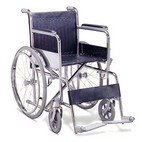
So I slowly recovered and made progress but never recovered the ability to walk. I could still stand if braced and supported, but that ability only goes so far. I remain a prisoner of my wheelchair.
In the subsequent years I accomplished a great number of tasks which I was told I would be beyond my ability. Still so many more were out of reach for my world was now within a "bubble" where I could independently go only so far left or right, forward and back and up or down. As a proudly independent person, that loss was the most devastating of all.
Having moved to a new house several years ago, I decided to redecorate. While I did paint the walls and most of the ceiling, I wasn't able to get close to the light fixture with the paint-roller (on an extender). No matter, I would get it when the light fixture was exchanged for another.
My friends and family always offer help but it is on their timetable. I'm impatient and want to accomplish tasks immediately when I see them calling out for service. "We'll do that later," "not now," or "leave that for another time" annoys me for I found out long ago that if something is out of sight, it is also out of mind. Another time may never come. Repeated pleas for help often are deferred and chores remain undone.
I am too proud to beg; repeated requests become "badgering"; I have never ordered anyone to do anything, and so I remain quietly frustrated with my own lack of ability to complete tasks which were so easy to accomplish a number of years ago. I now wait and wait for charitable service when that someone's mind remembers and the their body is willing.
So now I lay in my new room--freshly painted some three years ago, and stare at a different ceiling. There was no time allowed for me to finish painting the small area beneath the previous light fixture. "We'll do that later." I was grateful that my friend exchanged one light for another--his dirty hand-print on the white ceiling reminds me daily of the help he extended.

Nightly, I look at that beige halo on a white ceiling which encircles my light and find it a reminder of my inability to accomplish so many of even the most simplest tasks. I doubt it will ever be painted in my lifetime. How can such a small thing be so devastatingly depressing?
* * *
While sleep disorders such as sleep apnea are not a "disability", but rather a condition or an affliction, or what have you--I thought I'd add my two-cents worth regarding the unnecessary hefty expense ($$$) of a CPAP cleaner on your wallet or the generosity of your insurance plan. As of late, several brands have been forcefully marketed via television commercials.
Marketing 101: Increasing Sales: Make people afraid of something, then sell them an item or service which you insist will alleviate their fears. This sales technique also works well in politics.
As a former microbiology laboratory technologist, I watched fellow Canadian William Shatner hawk a CPAP cleaner on television. A good money-making opportunity is never lost on competitors and imitators. Soon rivals began to promote their version of the expensive and unnecessary item.
What is a CPAP? It stands for Continuous Positive Airway Pressure and is a device which supplies air under increased pressure, theoretically keeping organs of the throat from collapsing and blocking the airway. When this occurs, the person may stop breathing for a number of seconds leading to oxygen derivation which, as you can imagine, may have serious consequences. By gently blowing air down the nose and windpipe, most commonly via a mask which the user wears, the airway is kept open and theoretically results in a healthier and more restful sleep. Surgery is another remedy but understandably it is less popular than strapping on a CPAP mask at night.

Most CPAP cleaners have a water reservoir which when filled with sterile distilled water, moistens the air so as to not dry out the users upper respiratory tract during operation. Water condensate may be present in the hose after use, however, this vapor condensate is a poor medium to nourish the small amount of non-pathogenic environmental bacteria which may have made it pas the filter. Remember, these are the same environmental bacteria which you encounter in you home on a daily basis, regardless of the amount of cleaning and scrubbing you perform.
When I first watched the television commercial for a leading brand of cleaner, I almost doubled-over in laughter watching the dramatization of a fellow vigorously shoving some sort of pipe-cleaner repeatedly down the hose in an attempt to scrub it clean. I swear he appeared to be raising a sweat as his elbow pumped repeatedly like a piston in a revving engine. If your CPAP tub is so soiled--if your CPAP tub is filled with fecal coliforms, then perhaps you're strapping the mask over the wrong orifice and you should re-read your manual!
"If your CPAP tube is so soiled--if your CPAP tube is filled with fecal coliforms, then perhaps you're strapping the mask over the wrong orifice..."
As a microbiologist, I cultured the entire inside length of several CPAP tubes* after weekly use and found very low numbers of common environmental "dust" bacteria such as several Bacillus species as well as Staphylococcus epidermidis and related non-pathogenic Staph species. The face mask proved to have similar non-invasive common skin bacteria such as Corynebacterium species and Streptococcus viridans. Unless severely immunocompromised, these should not be a cause for concern for the user. Those are the same bacteria you commonly find in your home and in your nose and on your face.
However, some diseases such as Cystic Fibrosis result in the colonization of more hardy bacteria such as mucoid strains of Pseudomonas aeruginosa or coliforms such as Klebsiella pneumoniae. If afflicted with CF and a CPAP is recommended by your physician, more frequent and thorough cleaning of the unit may be warranted. Again, the commercial cleaners will probably not be up to the task. Link: CPAP information for those with Cystic Fibrosis.
How to Clean your CPAP Hose & Mask:
Submerse the hose in a bowl full of soapy water and allow the solution to touch all surfaces as it runs through the interior. The same soapy solution (dish detergent, or better yet, a hypoallergenic skin wash) can be applied with a damp washcloth to the face mask nightly before use or even once a week if your ambition so dictates. Rinse all with clean water afterwards.
Too hard to periodically rinse with a soapy solution? The leading CPAP cleaning unit sells for $399 dollars Canadian ($295 U.S.). However, the drain on your wallet doesn't end there. It is recommended that every six months, the user replace the Cartridge Filter Kit which retails for $40 Cnd.
So, how does the CPAP cleaner claim to clean the CPAP unit? It exposes the surgacesto what it calls "activated oxygen" which is in fact, ozone. While ozone does have antibacterial properties, the FDA claims commercial CPAP cleaners cannot achieve the level of ozone necessary to effectively kill the bacteria.
Apart from not being effective,, the odour of ozone may be retained by the hose/mask and must be flushed from the unit by those who find it offensive.
Other manufacturers use ultra-violet light (U.V.) as a source of sterilization. U.V. light may be adequate for surface sterilization, however, it has poor penetrating properties and organisms must be exposed to the source for an appropriate length of time to be bactericidal.
In their own words, the FDA reported that devices claiming to clean, disinfect or sanitize CPAP devices or accessories (such as masks, tubing, headgear) using ozone gas or U.V. light are not legally marketed for this use by the FDA in the U.S. According the the FDA, it is unknown if these CPAP cleaners are safe and effective.
I am not a doctor and am not recommending any particular action. It is up to the user to decide what they are willing to do or to spend in order to feel safe. I simply wish to share my microbiological experience with CPAP units.
Any commercial broadcast on TV, seen in print or found on the internet, can be broken down and explained in ten words: "Send me your money and your life will be better."
*I no longer have possession of my study and won't further bore the reader with recalled specifics.
* * *


