


Wednesday, 30 March 2016

Marijuana: Recreational Drug or Serious Medicine?


Just think if Aspirin gave a buzz in addition to relieving headaches.  You might be accused of wanting a high rather than just trying to stop you head from pounding.  You may never have seen it  in your medicine cabinet.

Why are governments, health advocates and doctors so reluctant to accept marijuana/cannabis as a potent legitimate medicine which just happens to have pleasurable side effects?  High-browed officials exhibit shortsightedness and prejudice simply because the substance may have first used recreationally.  Governments and much of the medical establishment see tie-dyed draped, head band wearing, long haired hippies toking away on a giant doobie whenever they hear the word “marijuana”.   “Far-out, man!”

I grew up in the 1960s and many of my idols were of that generation indulging in ‘free love’, psychedelic music, and ‘high times’.  Jim Morrison of the Doors was notorious for always being high.  Paul McCartney of the Beatles was arrested for carrying ‘pot’.  Jimi Hendrix smoked marijuana and died the victim of harder drugs.  My immediate friends all smoked dope and peer pressure was always there to join in.  Yet I resisted and got through the ‘60’s (and to the present) without sampling the wicked weed!


As a victim of a spinal cord injury in 2006, I have lived every day since with severe neurogenic nerve pain, a sensation almost impossible to describe with any accuracy or degree of severity.  Along with the intense and constant nerve pain are the paralytic spasms causing limbs to rhythmically contract and relax, sometime violently, often for hours on end.  There is also the rigidity or tightness (tone) in the affected muscles impedes motion and restricts flexibility.  Marijuana’s primary active ingredient of Tetrahydrocannabinol (THC) and perhaps other constituents has been shown to have a positive effect, reducing all these symptoms significantly.

While I survived the 1960s without trying marijuana,  I would light up immediately if I could get relief from the extreme pain and extensive discomfort I have lived with every second of every hour of every day for the last ten years!!!  Yet how do I approach my doctor for a script, a prescription when many do not wish to get involved or become “pushers”.  How do you shop around for an open-minded doctor when so few physicians are taking on new patients during the doctor drought in my province?  I too have listened too intently to the negative hype and feel embarrassed to ask?  Yet if I could only get some relief!!!!

A National Post article[i] of October 30th, 2011 reports on a Canadian Medical Association Journal study from 2011 that involved 21 patients with neuropathic pain — a common and dreaded condition that causes electric, stabbing pain found that smoked cannabis at low doses reduces pain, improves mood and helps sleep, without making people high. All had “refractory” pain, meaning pain that had defied all traditional treatments.  For patients for whom the treatment works, cannabis can achieve about 30 per cent reduction in pain intensity.

A Toronto Star Article[ii] of May 14th, 2012 relates a University of California study which found that marijuana helps relieve pain and muscle tightness in Multiple Sclerosis (MS) sufferers.  Smoking marijuana can relieve muscle tightness, spasticity (contractions) and pain often experienced by those with multiple sclerosis, says research out of the University of California, San Diego School of Medicine.

As you can see, paralysis victims suffer many of the same neurological symptoms as MS sufferers.

Continuing: Rather than rely on self-reporting by patients regarding their muscle spasticity — a subjective measure — health professionals rated each patient’s joints on the modified Ashworth scale, a common objective tool to evaluate intensity of muscle tone.

The researchers found that the individuals in the group that smoked cannabis experienced an almost one-third decrease on the Ashworth scale — 2.74 points from a baseline score of 9.3 — meaning spasticity improved, compared to the placebo group. As well, pain scores decreased by about 50 per cent.

A Daily Mail Online U.K. article[iii] reports of a study published in ‘The Journal of Pain’ suggesting medical marijuana reduces the use of prescription opioids (up to 64%) in those patients battling chronic pain. The findings suggest that prescribing medical marijuana instead of painkillers, such as OxyContin and Vicodin, may help tackle the opioid epidemic that’s currently sweeping the United States (and other countries).  In addition to lower consumption of opioids, the patients in the study also reported fewer side effects from their medications. Furthermore, they reported an overall 45 per cent improvement in quality of life since using marijuana to manage their pain. 

Numerous additional sources and credible studies suggest similar benefits however I know of no large scale national evaluation of marijuana as a serious medicine which has been performed and recognized by government regulating agencies.  Perhaps the negative stigma is to blame.
The previously cited National Post article states that “No drug company wants to evaluate smoked marijuana as a medicine because there’s no money in it for them.”

Other problems remain even after medical and/or recreational usage is legalized.  Who will be eligible? Standardization -what dosage? Who can prescribe?  Can doctors opt out if dissenting? Who will be authorized to dispense the drug – drug stores or possibly liquor stores?  Medical or recreational –Taxation?  Will home grown plants be legal and allowed?

A London (Ontario) Free Press article[iv] from February 24th of 2016 relates: A staffer at the Organic Traveller store in London, Oakes said customers tell him they pay $12 to $16 a gram for approved, greenhouse-grown, poor-quality marijuana, when the street value of home grown is $10 a gram or less.  If people have the capability of producing their own medicine, and more cheaply, he said, “Why, in a free and democratic society, can’t we do that?” 

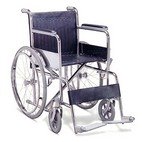
The article goes on to say that Shoppers Drug Mart has shown interest in dispensing medical (and recreational?) marijuana when finally legalized and dispensing guidelines established.  I truly hope it will not be Shoppers Drug Mart as the total incompetence they exhibited in providing service for the wheelchairs they sold under Shoppers Home Healthcare has me cringe.  You can read about my problems in a previous blog post entitled ‘If You WantService Like This, I Recommend…’

How many people are we speaking of?  The previous National Post articles states that as of Sept. 30, 2011, 12,216 people in Canada held authorization to possess marijuana for medical purposes.  The above 2016 London Free Press article states that as many as 40,000 Canadians have prescriptions for medicinal marijuana.

I have a hard time accepting these figures as that would mean that the number of people who have obtained prescriptions for medical marijuana in Canada has increased by 28,000 people in the last five years.

Could we really be such a laid back, mellow nation with a bad case of the munchies?

One final note; in adults, marijuana has no serious direct side effects.  It is difficult to overdose on marijuana.  There has never been a proven overdose death directly caused by marijuana in humans.  (Stupidity yes, marijuana No)  You don’t necessarily have to get ‘high’ to reap the benefits.  Low doses of the active ingredient may be all that is required to substantially improve the quality of some patients.  Some have suggested that the drug might eventually be taken orally as a pill rather than through smoking.  As a lifelong non-smoker, that would be fine with me.


I’m stiff, I spasm, I hurt badly.  Where do I sign up for relief?


 *   *   *

A Decade Has Passed


A decade has passed.  It was around this time…late March and early April of 2006 when I went to bed with a backache and woke up a paraplegic.

The dates aren’t exact, whether though pain or feverish fogginess.  I don’t wish to remember details.
I thought it was just another severe backache, the third of such that I’ve experienced over the years.  What caused the backache is also uncertain as I had no recollection of having strained my back through any exertion.   As with the two previous episodes, the pain was so severe that it was excruciatingly difficult to lift my legs to step into my vehicle or into the shower.  It was so incapacitating that I literally had to hold onto the wall to inch my way along.  I thought this episode would pass as the other two had.

My doctor had recently given up his practice and I had yet to find another so I had obtained ‘pain killers’ and a muscle relaxant from a walk-in clinic.  No tests were performed.
Still, I had made it to work that ‘last’ morning to complete a task started the previous day - then left early.  I recall painfully stepping out of my van, not realizing it would be the last time I would exit from the driver’s side.  I made it home and collapsed in bed.

Time passed, I’m not sure how many days….all blurred through my fogginess.  I was so painful to even make a trip to the washroom that I had my wife bring me a container so that I wouldn’t have to make the fifteen foot excursion.   My aim wasn’t always accurate and the bed became additionally damp through sweat.  I recall one attempt to make it to the bath tub for a shower, yet unable to lift my leg high enough to climb in, I returned to my bed in defeat.  I now wonder if taking what shower would have resulted in a different outcome…

Sometime in early April I awoke with the realization that my legs would no longer move.   In disbelief I tried again.  Nothing!   I had my wife call for an ambulance and with that trip, my life changed forever.

Approximate Timeline of Significant Events: 
(for a more accurate timeline, individual previous posts can be followed)

Late May – Early April 2006:  Backache resulted in paralysis.  Diagnosis was a Staphylococcus aureus infection at the T-5 (?) and (?) T-7 spinal vertebrae.  (I’ve heard both anatomical locations mentioned)

April 2006; Spinal surgery to drain abscess followed by six weeks of intravenous antibiotics.

May 2006; wait for admission to Rehabilitation Hospital.

June 2006; admitted to Rehabilitation facility specializing in neurological illnesses and related treatment.

June to November 2006; Begin to receive physiotherapy for one hour daily, weekends excluded.

November 2006; notice the slightest movement in my legs.  Discharged from hospital.

January 2007; Inflammation recedes, and motion from core to legs begins to return.

March 2007 to summer 2010; receive physiotherapy about three times a week at my local community hospital. 
2010; Return to work, part time for two weeks, then full time (8 hour day).  Hospital physiotherapy department no longer accepts outpatients do to downsizing, therefore approach a private physiotherapy clinic for additional treatment.

October 2015; Retire from my employment.

Timeline of “Recovery” or at least changes in mobility, flexibility, pain and other medical sequelae of spinal cord injury.  (may seem somewhat redundant)

Late March or Early April of 2006; Spinal Cord abscess  due to Staphylococcus aureus infection at the T-5 and/or T-7 spinal vertebrae results in paralysis.

November 2006; just before discharge, notice slight motion when trying to draw knees together

January (early) 2007; Inflammation from injury recedes and motion dramatically increases in core and somewhat in legs.

January to March 2007; home therapy by visiting nurse comprised of basic exercises.

Sometime in 2007?;  I was discharged from the hospital with both urinary catheters and laxative 'magic bullets' as the belief was that these functions were lost to the injury.  On discharge, no instructions or expectations were offered.  I soon found that I needed neither of these as I could go fairly normally "on both accounts".  While I may no longer be able to hold it "until my teeth float", all plumbing has returned to normal.

March 2007 to Summer 2010; Physiotherapy at community hospital physiotherapy department strengthens legs and balance.  Improve from basic motion to walking with a walker.

2010; Physiotherapy department no longer accepts outpatients due to downsizing so I approach a nearby private clinic to continue therapy after work.  They can only offer simple therapy (stretching, massage, a crowded room to walk in).  Discontinue professional physiotherapy in spring of 2011 as I can do as much on my own in private.

2010; return to work which consumes a great part of my day.  Difficult to find time and energy for any sustained outside exercise or therapy.

2013; join a private gym to try to maintain and improve on flexibility and mobility.  Some improvement is noted.  Discontinue after two years due to time constraint and other obligations.

October 2015 to present; retired.

So Where Do I ‘Stand’ (?no pun intended?) a Decade Post Injury?

Like all others faced with such a catastrophic injury, my first thought was that “with hard work, I can beat this!”

Well, the bottom line is this; I went from total paralysis from my chest downward to now being able to stand upright unsupported if I first stabilize myself.  I can walk short distances with a walker.  ‘Short’ is hard to define as I really don’t have a longer clear, flat and unobstructed stretch where I can walk.  I have walked with the walker when necessary and climbed steps when I can utilize a handrail.

I can move some toes on each foot.  I have fairly good flexibility, but cannot sit back on my heels.  While I can lift my legs up and down while sitting in my wheelchair, I cannot bend them back while sitting in the same chair – I would have to lie on my stomach in bed to make this motion and I am in that position much less daily.  Those muscles, the ones which also would allow me to stand up naturally, without holding on to anything, remain weak.  This also translates into overall stability.

Core Stability and Tone; Muscles run along your entire frame from feet to shoulders and work in conjunction with each other.  When some are not working normally (normal range), other unaffected muscles will try to compensate but simply cannot work to their full capacity.  When I stand, my core stability is such that I always feel that if I tilt slightly off absolute vertical, that I would find it difficult, if not impossible to correct and would topple over in that direction if not for gripping the walker.  That tautness has not returned to hold me absolutely vertical without a struggle.  My core is tight and it there is a good deal of resistance as I try to twist at my waist.  I can however, bend without any difficulty and am able to pick up a sheet of paper dropped to the floor from my chair.

Proprioception returned slower than my basic mobility but it has returned.  I know where my feet are ‘in space’ although the senses may not be quite as precise as before.  Sensations of pressure and temperature have also returned but again may be somewhat muted or slower in being realized when changed.

Achilles’ Tendons; as mentioned in other posts, the Achilles’ are tight and keep my toes pointing downward towards the floor.  I blame the hospital stay for much of this.  Six months lying in a bed with no pressure on the feet allows the Achilles’ to shorten and retract.  Once they have done so, it is almost impossible to stretch them back out if you are not back on your feet constantly.  It’s a ‘catch-22’ as a recovering paraplegic you cannot be on your feet constantly.  Perhaps if they put your feet in some sort of rigid boot which applies a force preventing this from occurring, recovery would be faster.  However, the hospital had already written me off as to never walking again, so limited therapy was offered.  So, I have tremendous plantar flexion (rotating at the ankle to push down) and can stand on my toes, but while I do have dorsi-fexion (rotating my foot at my ankle upwards), it is not nearly as strong as downwards and toes cannot be raised as high off the floor.

Pain; Pain remains one of my greatest problems.  It is an unseen disability and is therefore hard to impress upon others, even doctors.  Pain so severe that it robs you of your concentration, and steals any remaining quality of life which remains post injury.  Anyone who has followed my posts knows I have severe neurogenic leg pain as well as sciatic nerve pain in my left hip –from both there is no escape.  Medication has little if any effect.

Spasms; what changed in my ninth year of paralysis?  Suddenly a second type of spasm manifested itself which I’ve called “atomic spasms”.  The spasms I endured for the first nine years would make their appearance at any time, however, much more frequently in the evening hours.  One leg or the other would repeatedly contract and relax, over and over, sometimes for a few minutes but more often for hours on end.  Once asleep, they would leave me alone until the next day.  In March of 2015, in addition to the regular spasms, I suddenly experienced these ‘Atomic Spasms’ which explode without warning and hold at the extreme displacement of the limb.  They may even sprain the joint!  They have thrown me from my bed and the limb cannot even be forced down pushing with both hands.  You cannot read, sleep or do any meaningful task while you limb is involuntarily bouncing around on the floor or bed during either spasm.  If I awake at night, I’m afraid to move as they may trigger these atomic spasms to start or resume.

Muscle Memory; a term used to explain your muscles recovering from injury.  It is a fallacy with spinal cord injury.  I couldn’t figure out how to turn over in bed and had to teach myself all over again.  Nothing came back ‘automatically’.

So, the bottom line is this; I am fairly self-sufficient in that I can look after myself without much outside input.  I get up in the morning, make my bed,  take a shower, cook and carry out most other functions independently and without any specialized equipment other than my powerchair.  I returned to work for almost six more years, enduring eight hour days not including travel.  I have yet to re-obtain my driver’s licence and purchase an accessible vehicle (van), primarily due to the costs involved.   I regret that my wife has to take over other duties which used to be mine.  She now does the laundry (yes, I used to do my own), we shop together where I often stopped off after work to pick up necessities.  She mows the lawn and takes out the garbage.  I try to step in and help where I can.

What’s to come?
Who knows?  Never in my wildest imagination did I think I would be spending my last days in life bound to a wheelchair.  I am stubborn and thought if I fought the good fight, I would overcome this disability.  I will continue to try to walk more, each and every day.  I should get to a pool where the buoyancy would assist my attempts to walk.  I am hoping to put together a home gym.

Final Note;
I own a two story house with bedrooms on the second floor.  Since coming home from the hospital, I’ve lived in our living room as my bed room.  I have command of three main floor rooms (not counting the washroom). The house was in the midst of repainting and redecoration when I became disabled.  Sadly it remains in that same state today.   Not much for the dreams and rewards of a lifetime of work.  I assembled a terrific woodworking shop in my basement where I intended to spend my retirement.  Not having been downstairs in a decade, my plans mock me.
Regrettably, one of the rooms that is still accessible to me is the kitchen.  Confined to the wheel chair, boredom is always hiding around the corner, and the most vigorous exercise I have is using a joy stick.  That fridge always beckons. 

Thursday, 24 March 2016

No Escape


  • Searing, burning neurogenic nerve pain from the knees down to the toes.  Twenty-four hours a day, seven days a week, three hundred and sixty-five days a year for ten years next month.  No hope that it will be any different for the rest of my life.
  • Sciatic nerve pain - a shooting, stabbing pain in my left hip which hi-jacks my focus as when at its peak, it draws my attention from any task I'm involve in, every minute or two.  A pain that you just cannot put out or your mind and ignore.  Whether sitting in the chair or lying on my stomach, the pain throbs with every heartbeat.
  • Spasms -the regular spasms cause one leg or the other to alternately contract and relax, contract and relax, over and over and over.  Rarely for only a few minutes but more commonly for hours on end.  These spasms have lasted up to six hours at a time.  Then this year, a second type of spasm manifested itself which I have called the 'Atomic' spasm.  With Atomic spasms the contraction is so sudden and severe that it tries to contract further than the joint is anatomically or physiologically intended to go.  The result is extreme pain while the spasm holds the limb at its maximum displacement.  The contraction is so severe that it can actually sprains the muscle/ligament/tendons involved.  One has actually pitched me from my bed.   Two curiosities about spasms - while they can occur at any time during the day, they almost always come on in full force during the evening hours.  Secondly, while both limbs may jerk as the spasm crosses sides, they occur only on one side at a time.  That is, thankfully both legs do not contract with spasms at the same time suggesting some sort of shared pathway that only one side can command at a time.  The regular spasms are usually preceded by an increasingly creepy feeling in the leg which feels like the leg is buzzing with electricity, filled with hot sparkling soda water or just blown up to twice its size.  The sensation is so un-nerving that you want to dance around the room, but of course, you can't.  Pure hell!
  • Shocks - they feel as small and precise as a pin-prick sized jolt or stab which makes you sit up in a shot and grab hold of the armrests, or as large as encompassing an entire toe.  The jolt is usually such an unexpected surprise that it might be accompanied by a yelp then closely followed by swear words.
  • Core stiffness - muscles along the body's frame are all somewhat interconnected.  When not used fully, or as normally intended, they contract.  The result is a very tight core where twisting and bending is impeded by a tight stiffness which no amount of exercises can loose.  Only using all muscles as intended (walking) would loosen the tightness, assuming that 'contractures' have not occurred - where tissues actually fuse to each other, perhaps permanently.  This stiffness makes it more difficult to turn over in bed or even to conduct simple hygiene as in cleaning yourself properly after using the toilet.
While taking a 'handful' of drugs three times a day to combat the pain and spasms, they seem to have little or no appreciable effect.

The consequences of paralysis are obvious and detract from fully experiencing an enjoyable and productive life. (my admiration goes out to those who say "no problem!")

The never ending pain on multiple levels robs your concentration on any task you are engaged in.  The spasms too destroy the quality of whatever life remains as it is all but impossible to read a book or hold a lap-top computer as your legs bounce around for hours on end.

Perhaps my spinal cord injury caused by a bacterial infection and subsequent release of toxins and enzymes is different from someone who has a crushing or severing injury.  How do you compare pain levels between different types of injuries and the extent of damage caused by those injuries?

I continue to struggle, however this is just "existence" and certainly not anywhere close to "living".

*   *   *

Monday, 7 March 2016

Torment Carries a Timepiece


(or How do Spasms know it is Nightfall?)


Spasms seem to know when the sun is setting as they start up in earnest once evening arrives.  Another torment a spinal cord injury brings with it which in my opinion is worse than the paralysis.  Just when the day is over and you think you can relax. your physiology won't let you.  For me it starts with an increasing creepiness in one leg or the other.  The burning 'pins and needles' sensation increases to very uncomfortable levels - I don't know where to run...and I can't run anyways.  A tell-tale sign of what is about to follow.

Soon after the first spasm arrives.  A quick jerk of the leg.  The knee may just rise up off the bed slightly.  Soon after it is followed by another, and another and another as they grow in intensity.  At full throttle the entire leg can lift off the bed and crash back down, over and over and over.  Sometimes there is as little as 5 or 6 seconds between spasms, sometimes 10 or 15 seconds.  They are almost always rhythmic, uniformly keeping the period and the amplitude of the spasm.  I look at my leg and am reminded of a freshly caught fish jumping up and down on the dock, writhing in discomfort.

Spasms can last a few minutes but have lasted up to six hours.  If I tried to do leg lifts for six hours I wouldn't be able as fatigue would set in within a few minutes, yet the spasms seem to draw on some perpetual energy and keep on going, and, going and going.

How do you sleep when your leg is lifting itself off the bed repeatedly?  How do you get rest for work?  How do you keep your sanity?  I have thought of getting a knife and jamming int into the thigh muscle in hopes of turning off the mechanism!

The spasms have been so explosive and violent that they have thrown me from my bed.

So what causes them to occur?  An electrical impulse across nerve endings?  A persistent drip of neurotransmitter?  Does the spinal cord injury disrupt some sort of control or 'feed-back' mechanism which disperses the instigating cause when not intentionally needed by the person?

Why do they seem to start up at will and then after some variable period, shut down at will?  And most of all, why do they always seem to come on in force at nightfall?  Is there some change in body physiology that causes them to begin?

  • It doesn't matter if my legs have been in a sitting position or lying down on a bed all day, they will still come on.  I thought it might be some fluid accumulation that causes the muscles to contract to disperse this fluid.  Whether I drink lots of fluids or few, it seems to have no bearing on whether the spasms arrive or not.
  • Exercise also does not seem to affect the arrival, intensity or duration of spasms.  Whether I went to the gym, or walked with the walker, the spasms still occur.
  • temperature (circulation?) - at times my legs have felt normally warm or unusually cool but this does not seem to be linked to my spasms.
  • diet, weather, stress
  • putting pressure on the foot sometimes seems to lessen the spasms, other times seems to have no effect.
  • Why are spasms unilateral?  That is, only one leg will spasm at a time (thank goodness!), however there may be a few on alternate sides as they cross over if the don't end but decide to change sides.
  • What other factors am I missing? 
Baclofen, a drug taken for spasticity seems to have little or no effect on the 'jumping leg spasms'.  When I tried to gradually reduce the dosage, I found an increase in overall stiffness but the "spasms" remained the same.

I now dread the setting sun knowing that my leg will become creepy and start jumping over, and over, and over.....

*   *   *

Tuesday, 1 March 2016

Shoppers Divesting Wheelchair Operations


Shoppers Home Healthcare
More Like
Shoppers We Don't Care

Where do you find a competent wheelchair repair service in Ontario, Canada?

Those of you who have followed this blog already know of the aggravation and frustration I've experienced in my attempts to obtain wheelchair repairs from Shoppers Home Healthcare.  If not, check out the post entitled 'If You Want Service Like This, May I recommend...'

Well, misery loves company, and it appears that there is plenty of misery out there for those attempting to obtain wheelchair service through Shoppers Home Healthcare.  Are they truly that uncaring, that incompetent, or was the plan all along to rid them selves of the home healthcare service which included wheelchair sales and service?

A recent article by reporter Jonathan Sher of the London Free Press (Ontario Canada) outlines the problems with Shoppers Home Healthcare in that city as well.  Jonathan reports that Shoppers intends to divest itself of the 'health care' aspect of its operation which includes wheelchair sales and service.


Recently, Loblaws, a major supermarket food chain, bought Shoppers Drug Mart under which Shoppers Home Healthcare operated.   I believe that Loblaws simply wanted Shoppers for their 'pharmaceutical' sales and nothing more.  One stop shopping - is seems as if every food supermarket has a pharmacy these days.

According to Jonathan Sher's article, Shoppers Home Healthcare was given a monopoly by the Ontario Government to sell and service wheelchairs.  It seems as if you were expecting government assistance in funding these expensive power wheelchairs, you had to deal with Shoppers.  Why a monopoly?  Competition not only drives excellence but lowers costs.


It appears as if Motion Specialties will be acquiring some of the business that Shoppers is divesting itself of.  Whether they will have another monopoly or whether there may now be some competition is yet to be seen.

In my frustration with Shoppers Home Healthcare, I switch to Motion Specialties as my service provider.  To date, they have offered excellent, compassionate and timely service.  My fear is that there will be an adjustment period after acquiring Shoppers clients and that service may falter as a result.  My hope that any growing pains would be temporary as the business expands.

The disabled may be some of the most vulnerable people in society.  Service providers must offer timely and compassionate service at an honest price.  This is not where you should be making exorbitant profits either from the client or the government.  If unable, you shouldn't be in the business.  And be thankful that you are not held hostage by a wheelchair.

Those familiar with my blog posts know of the multitude of problems I've experienced with my current Permobil power wheelchair.  I have to wonder about the quality of materials and workmanship that go into these essential medical aids.

  • Why do wheelchair manufacturers only give a year's warranty on their product.  Do they have so little confidence in what they produce?
  • Should not the wheelchairs components be manufactured from military or medical grade materials?  At least the electronics?  I have had to replace virtually every component on my current chair and it is only three years old.  This chair is not abused and is used almost exclusively indoors.  I know as a fact, certain components on my current chair are manufactured in China, and most likely by the lowest bidder.
  • Replacement parts are so expensive that many are not kept in stock and must be ordered internationally resulting in extensive down-time for the wheelchair client.
  • As a health care worker in a hospital setting, I encountered and had conversations with numerous wheelchair bound people.  Many brought up the issue of pricing and wondered why identical wheelchairs in the United States were three to four times cheaper than here in Canada?
Just imagine yourself having broken down in the middle of a busy intersection on a rainy day with a full bladder.  You call up the Shoppers service department and get their answering machine.  You request a service call and leave your cell-phone number.......and nobody gets back to you....ever.

On one particular breakdown, I called their service department and left 21 messages over several days, requesting a service call and never got the courtesy of a call-back.  Shoppers.....they just don't care, and I for one am glad they will be out of the wheelchair business.  They should never have been in it in the first place!

New March 20th, 2016

Read the comment from a visitor to my blog for additional commentary and insight on the 'Shoppers' shameful mismanagement of their wheelchair obligations. (click on comments immediately under this post)

Just as an aside, I received a great deal of Shoppers 'Optimum' points when I purchased this sad excuse for a wheelchair.  I thought that I was continuing to accumulate points whenever I was "forced" to shop at Shoppers.  The other day my wife had the cashier check to see what our total was.  Interestingly it was a big ZERO.  I thought that points no longer expired....silly me...

A London Free Press newspaper article of February 24th, 2016 has Shoppers Drug Mart stating that they are interested in dispensing Medical Marijuana once the government legalizes the medicine general accessibility rules and provides dispensing guidelines.  If Shoppers Drug Mart is as incompetent in dispensing Medical Marijuana as its Shoppers Home Healthcare division was in servicing wheelchairs, then I suspect patients/clients will be severely disappointed!

New April 8th, 2016

An April 8th article by City TV’s Shauna Hunt describes a disabled fellows attempt to get his wheelchair back from Shoppers Home Healthcare (more like ‘Shoppers We Don’t Care).  The diabetic has a loaner chair which is far too large for him.  He found the loaner very tippy and actually fell over breaking a tooth.  The Provinces Assistive Devices Program (ADP) paid $754.00 Cnd for the repair, however the chair was never returned to the client.  He states that he has been calling Shoppers three times a month however the calls have not been returned. (sound familiar?)


The Shoppers location has signage which informs of its closing on March 22nd of 2016 and directs people to call Motion Specialties for service.  Motion specialties did manage to find his chair at the original Shoppers repair shop after some four hours of inquiries.  His chair now has been returned.

City news contacted the Ontario Government’s senior and Long-Term Care Critic, Mr. Bill Walker who believes wait times for assessment and repairs for mobility devices has become unacceptable in Ontario.  He goes on to mention another instance where a disabled client waited nine months for an inspection, let alone repairs being started.

*   *   *

I just don’t get it!  This is not even incompetence!  Shoppers Home Healthcare really had to have a ‘game plan’ and make a concerted effort to be this bad!  Were they purposely trying to lose the business after the Loblaws supermarket chain purchased the Shoppers pharmacy chain for their pharmaceuticals alone??

Shoppers Home Healthcare has willingly decided to drop their corporate pants and crap on the disabled, the most vulnerable citizens of this province.  My advice to the disabled, and to anyone else who has compassion, not to give Shoppers Drug Stores your business, whether within or outside of Loblaws.


*   *   *

Monday, 29 February 2016

Handicap Parking Scofflaws


  Understand???

The city of Toronto has recently has been cracking down on able-bodied persons who use Handicap Designated Parking Spots without proper documentation (Handicap Parking window sticker or license plate) or with those fine citizens who use borrowed, stolen or fake permits.  It didn't take long to charge hundreds of violators, each with their own excuse.

  • Oh, its okay, I was only going to be a minute.
  • Its not my fault! I couldn't find any other spot. The lot was full.
  • Its a legitimate permit!  It belongs to my mother who is home and couldn't come along.
  • My leg was sore this morning - I thought it would be okay.

  • I found the permit.  You mean it was wrong to use it?
  • It just expired last month and I still don't feel one hundred percent.
  • This mall is private property...the city has no jurisdiction on private property!
  • You mean I can't a photocopy of my friend's legitimate permit?
  • Why should the disabled get all the breaks?!

Stuck in this wheelchair, I would give anything to be able to walk from the far side of the parking lot to the far end of the mall.  But I can't...


I somehow thought that those who are ambulatory and otherwise healthy would feel ashamed to take away parking spots from those that are in need of their proximity.  But there appears to be little shame these days.  It seems that many of us have become too busy, uncaring and self important.

'Baby-Boomers' are reaching that age where the body begins to fail us.  New drugs and innovative procedures are having us live longer.  Each year there are increasing requests for permits to be issued.

According to the Toronto Star Newspaper:

There are 119,000 people with permits in the GTA and 687,000 in Ontario, according to the ministry's records as of 2015.

Heavier fines for parking in an accessible space don’t appear to have discouraged the illegal use of disabled parking spots.

Although parking enforcement officers have slapped drivers with nearly $45 million in tickets for parking illegally in a space for the disabled since 2005, they have written about the same number of tickets each year.

The fine more than tripled in 2008. Parking enforcement doled out $1.5 million in tickets in 2007 and $4.5 million the next year but issued about 12,000 tickets a year.

Police seized 800 accessible parking permits for misuse in 2015. The fine for using someone else’s permit ranges from $300 to $5,000, for repeat offenders.

The Canadian Broadcast Corporation (CBC) has also reported on the problem of Toronto drivers misusing handicap parking spaces.  It appears to run rampant and people really don't seem to have a 
conscience.  

Ensure handicap parking spots are well marked and kept clear of obstructions for the benefit of both the disabled client as well as to eliminate any doubt from the able bodied.

Other reports have people griping that many of these tickets are written simply as a "cash cow" - a means for the city to collect money for their coffers.  While I sympathize with those who feel the handicap parking spot was poorly marked, the onus really does fall on the driver to know where they are leaving their car.   

Unless you are Captain Ahab with a wooden peg-leg, you probably shouldn't be using this spot!

This fellow appears to be doubly diabled!

...as is his brother!

No window permit, no disabled license plate...no parking!!!

Blindness is a disability.  Benefit of the doubt: may be a blind driver!

Captain Ahab's nautical friend.  What can I say?

Neither, rain, nor snow, nor disabled parking spaces, will keep us from delivering the mail!

Update 21/03/16 -Doesn't take long to add more idiots to this collection.  A gentleman confronted a woman leaving a Tim Horton's coffee shop as she was heading to her car parked in a handicapped parking zone.  She admitted to having no handicap but they proceeded to throw one of her coffees at the inquiring gentleman.  Videotaping this altercation on his cell phone, he said that the thrown coffee could be considered to be an assault. Further words were exchanged and the second coffee thrown.
Reports are that the police did visit the woman and reprimanded her, but for what was not explained.  She had parked illegally in a handicap parking spot, assaulted the inquiring gentleman with two coffees, and littered by throwing the cups.  Some people have no shame.


Click Here to view the video if no longer available in the original article.
 You stay out of my parking spot and I'll stay out of yours...
 *   *   *

Monday, 15 February 2016

Cost of Operating the Permobil Wheelchair

My Permobil M300 power wheelchair is only three years old yet in repairs, in the last half year, I have spent almost as much as what the wheelchair cost me in the first place.

1.  Seat Post - $560 Cnd.
2.  Right Motor - $1137 Cnd.
3.  Left  Motor - $1137 Cnd.
    Total = $2384 Cnd. (Parts and Labour - No Tax)

My insurance company covered the Seat Post however I have not heard back about the first motor replacement and have not yet submitted the second motor - pending what happens with the first claim.  I'm sure they will start an investigation as who could possibly believe that two motors fail within weeks of each other.

My old Quantum lost one motor while still under warranty.

Surprisingly both the repair shop manager and the field service technician claim that the Permobil is a good chair.  I will let the reader of this blog decide for themselves.

Wednesday, 3 February 2016

Permobil Problems Never End

Second Motor on Permobil M-300 Fails Two Weeks after first motor replaced!!
At a cost of $1137.99 Cnd. each!!

I believe, other than the metal frame, 3 castor wheels and a handful of screws, I've just about had to replace or repair every component of this absolutely disastrous Permobil M300 power wheelchair.

Not even two weeks after having the right drive motor replaced at a cost of $1137.99 Cnd, the other drive motor has died.  I have no reason to believe the cost of the motor and labour will be any different than the $1137.99 paid out just weeks ago!!

The Permobil M300 Power Wheelchair is a Disaster!!


...and this Permobil M300 Power Wheelchair is only Three Years Old!!!
The Assistive Devices Program (ADP) which helps finance the purchase of these expensive powerchairs stipulates that you cannot approach them for a replacement chair for 5 Years!!  I have no confidence that this chair will last another two years!!  My bank account certainly will not!

Is this "planned obsolescence"?  Does the manufacturer purposely build in a defect or weakness that they know will break down in a given time period necessitating the continuous purchasing of repair parts from the company?  Is that ethical?...particularly when dealing with disabled clientele?

Not every disabled person using a wheelchair has a large 'wrongful injury' settlement and is swimming in cash.  Not every disabled person has a personal private insurance plan which will generously cover each and every replacement.  Not every person is independently rich!  Those of us on a fixed income with limited insurance must bear the cost of these ridiculously overpriced components ourselves.

And I do mean ridiculously over priced.  The motor alone is priced at $945.54 Cnd.

I might understand if this chair was constructed utilizing military grade components.  Instead parts, like the joystick are made by in China (Yes, I was informed as such) and most likely by the lowest bidder!

While the control unit has an elaborate display of coded lights which indicate what component is malfunctioning, they are all sealed components.  You know the problem but can't fix it!  Just like on the modular TV sets, you may have a resistor bulk valued at one-one-hundredth of a penny, yet when this resister blows, you have to replace the entire modular unit containing an additional 100 parts which are still working properly at a cost of hundreds of dollars.

The coded light display on the control unit tell me what is wrong within the motor - but the motor is sealed and because it is sealed, it cannot be fixed.  Cynical me - thought that the motor is sent back to the manufacturer where it is refurbished for resale at or near the full price.  The service technician tells me that they are not sent back but are trashed for scrap.  How's that for going green?!

What I've had to repair or replace so far on this 3 year old Permobil M300 piece of trash;

-Batteries died after about one year of use and had to be replaced. Although just after warranty expired, a sympathetic service technician managed to replace them at no cost.  (about $600 Cnd)

-Side arms swiveling mechanism broke numerous times - fed up I replaced the hinges with my own design - they have worked properly ever since. (Service costs not noted but no less that $100 each time; my own repair cost about $50 Cnd)

 -Right front Castor wheel Replacement Cost ~$150 Cnd.

-Seat post broke off from the frame presumably due to a bad weld - Cost = $530.22 Cnd.

-Right motor died;  Replacement Cost = $1137.99 Cnd.

-Left motor died; Replacement Cost = $1137.99 Cnd.

Other premature wear & tear or damage which I have repaired out of my own pocket has been the back seat cushion held on by sticky tape a velcro had come apart.  Screws holding the joystick unit to the frame had stripped and failed.  I replaced these with a better and longer screw, utilizing a 'pozi-lock' retaining nuts to secure the unit.  (Permobil used no nuts).  I've had to use 'lock-tite' screw compound to keep numerous screws from working free from the chassis.  Plastic end caps on the metal pipe frame have no set screw and are simply friction fit.  They were lost early on.  People have run after me with parts that have dropped off this chair.  It is all but self destructing!

I am able enough to do these modifications and repairs - not every elderly, disabled person is!

While I do have private insurance which has covered many of these costs, their generosity, if you will call it that, is not endless.  My benefits will run out, if they haven't already and then the burden will be mine.

Even if my insurance covers the cost of repairs, there is that inconvenience of having to deal with the repair service.  They need to schedule a visit for an assessment of the problem. Parts are expensive and not kept in stock so they have to be ordered from the parent company.  The nearest distributor for the Swedish company Permobil is in the U.S. State of Tennessee.  You would think that with faxing orders and overnight courier shipping, the needed part would arrive in a day or two.  Last motor replacement took several weeks, however, it was over the Christmas - New Years holidays.  Parts arrive and the wheelchair has to be picked up and taken to their repair facility as very little work, other than changing tires, seems to be done on-site.  The service technician charges a $60.00 flat fee for coming to your house to make a diagnosis or assessment of the chair's problem.

One more thing; This Permobil M300 Powerchair is used about 98% of the time indoors on smooth surfaces.  

I told my service provider that I want to take this chair out to my back yard and like some dying horse, shoot it!  My service provider asked if he could be present to witness the execution...
*  *  *