





Showing posts with label massage therapy. Show all posts

Saturday, 24 April 2010

Spring-Summer Regime

Spring-Summer Regime
(Concluding "Physio Lite")

In a previous post entitled "Physio Lite" I outlined my plans for the winter of 2009-10. Due to hospital restructuring, the outpatient physiotherapy program at my hospital was terminated and those patients, like myself, were advised to find continuing physiotherapy in private community clinics. I chose the only clinic near my workplace accessible without without having book additional transportation

My reason for finding a clinic was two-fold. I wished to receive additional therapy to strengthen my core muscles in order to have better control and posture when standing upright. Secondly, as my home did not provide enough linear space in order to practice walking, I hoped to find a longer continuous space in which to walk while the winter snows prevented me from walking outside.
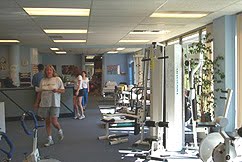
True to my expectations, the private physiotherapy clinic was not geared to treating patients with brain injuries, spinal cord injuries strokes or other major neurological tramas, but rather specialized in treating sports jocks and people with community acquired strains and sprains. That said, I found them to be quite professional and dedicated. The atmosphere and staff were welcoming and although the therapy sessions were a half hour each, I was never rushed and allowed to walk and use exercise equipment as long as I wished - usually dictated by by my scheduled ride home.
*(photo is of my physiotherapy clinic's gym. Gives some idea of the distance walked)

The half hour physiotherapy included a variety of stretches including hamstring, Achilles, and piriformis. I also recived further instructions on exercises I could do at home. Early in the new year of 2010, once a week massage therapy was added to the twice a week physiotherapy regime. Cost was paid for out of pocket but later reimbursed by my private insurance plan.

So what was accomplished in this half year of private physiotherapy?

  • on the first day of therapy my physiotherapist performed a piriformis muscle stretch and the spasm that it generated almost threw her across the room. The spasms quickly subsided during subsequent visits & stretches however, after a winter of receiving the stretches, the increase in range and reduction of spasms has not translated into reduced sciatic pain. It continues as unpredictable and intense as ever. The links provided shows a technique in performing the stretch that differs from how I received mine. I lay prone on a table/bench while the physiotherapist braced with her hand around my hip while pulling my leg outwards like the handle on a slot machine.
Another link which which may be of use - YouTube Piriformis stretch.

  • the range of my hamstrings is now about what would be considered normal, or pre-injury. The Achilles stretches were discontinued early on as the diminutive physio's physical effort was insufficient to be effective. (ie. I'm a big guy and she was a rather small young lady.) My own weight & repeated standing, whenever able during the day, was no doubt more effective than any force she could apply. Regardless, no matter how much I stretch the Achilles, I find that they tend to rebound to a tight state very quickly. The stretch doesn't last, perhaps due to the 'tone' I spoke of a few posts earlier. Early in January, I received another set of BoTox injections to the gastrocs and soleus muscles in hopes of reducing the tightness which prevents me from getting my heels down and not tilting backwards when standing. Although my physio thought she felt a slight amount of increased range right after injection, the amount she detected was minimal, nor did she feel the effects lasted very long. I felt very little change internally though after the effectiveness of the Botox wears off after about 3-4 months (due to the regrowth of the peripheral muscles targeted), I once again may have noticed a slight deterioration of my gait. (ie. walking was not as fluid and smooth). I now have to decide whether its worthwhile in getting future injections.
  • laser therapy was applied to my hip and sciatic nerve area in hopes of lessening the pain however, in the end, I feel it had no effect, even temporary.
  • Walking - core strength has improved which allows me to walk in an upright position and not lean heavily on the walker. In fact I can lift the walker off the ground while standing however I'm still unable shift weight to one leg while lifting the other foot, as in stepping, without the support of the walker. I don't have the measurements of the gym, however I graduated from walking the full length and back some 6 times when I first arrived to 25 to 30 times when I concluded last week. My stopping was due more to my time running out as my scheduled ride neared, than to fatigue. From full paralysis in 2006 to walking with a walker in 2010, I have yet to stumble and fall to the ground - a record I hope to keep.
  • I used an apparatus where I could lift weights with my legs or switch the configuration to pull the weight downward with the hamstrings. This improved the muscle mass and strength in the hamstring muscles and quads. In the end I was doing about 50 repetitions of 100 pounds each session - twice a week.
  • Massage therapy was started in January. Although advised by my BoTox physiatrist that it would be of little use and that I should save my money, I thought it was worth a shot anyways. During my post-injury recovery, my calf muscles have become rock-hard probably due to the tone - the very tightness which the BoTox had little effect on. More recently, I've noticed that my legs get very cold to the touch, especially at night (I don't feel cold, but the legs are noticeably cold to the touch). This again is probably due to the 'tone' - the brain telling muscles to clench which now constricts blood vessels and blood flow to the limbs (legs) affected. It appears that the doctor was correct as the legs remain very hard and tight even after my massage therapy coverage was exhausted. The massage was not restricted to my legs but also applied to stretching out and treating the lower back and piriformis muscles in an attempt to reduce the sciatic nerve pain. In the end I find myself undecided on the effectiveness. Some days post-massage I feel I have some relief, then again other days the pain that follows is as intense and as frequent as ever.
So, in summery, I did improve my walking, both in posture and endurance. Neurogenic nerve leg pain and sciatic nerve pain, however, remain and are as frequent and intense as ever. Both can be so intense that they make life very miserable 24/7 and are impossible to ignore.

The future? As I entitled this post, 'Spring & Summer Regime', it is now up to me to prepare a schedule and find a suitable location to practice walking and build on the endurance I gained at the physiotherapy clinic. With better weather, I can venture outside along sidewalks, in local parks or in shopping malls when crowds have dissipated. Structured physiotherapy provided the incentive to attend bi-weekly. Now it is up to me to find the discipline to continue walking on a daily basis. Wish me luck!

Friday, 5 February 2010

Odds & Ends

1- Had a third series of Botox injections two weeks ago and hoped that this would aid the tightness in the calf muscles to allow better movement/range from the ankle.

Now, when I had the first two series of Botox injections, the physiotherapists were concentrating on getting me up and walking - with the hope that Botox would improve my stride. They didn't check for range of motion pre and post injection to see if there was greater range and flexibility. Internally I did not notice any change in sensation nor any increase in range from my perspective. As the effects of Botox were to last about 3-4 months, before blocked nerves regenerated and formed new pathways, the only feedback I had regarding the effects of Botox therapy was what I thought was a shortening of my stride as the next injection date approached. My Physio and I thought that this was probably due to new connections circumventing the Botox blockage and therefore the Botox was effective.

Now that I am upright and able to walk for periods of time, my new physio was concentrating on various manipulations to my limbs such as stretching out the quads and hamstrings as well as the piriformis muscle (but more on that one later). As she was directly observing and working on the range of motion of my lower limbs, she was interested in seeing exactly how much more range the Botox therapy provided after a series of injections to the Soleus and Gastroc muscles (basically the two calve muscles joining to the achilles.

As it turned out, she said that there was an increace in flexibility and range a day after I received the injections, however now after only a week has passed, she no longer detects that change even with the increased therapy. Could the Botox really be that ineffective for me? If so, I really have to reconsider whether to take any more shots in the future.

2- As mentioned, I'm back to the Gabapentin from the Lyrica as in the end I felt the Lyrica had no greater effect that the Gabapentin, had fewer side effects (for me blurred vision and probable weight gain) and was less expensive which would please my private supplemental health insurance carriers.

3- Also as mentioned, I'm walking more at the physiotherapy clinic though still somewhat unsteady. Have to improve on the core muscle stability as the muscles, particularly the lower back, tire quickly. Trying to regain that link - feedback from the feet on the floor, telling the brain what's happening and subsequent messages from the brain telling the muscles how to perform to correct, compensate and maintain balance while upright. Since standing for the very first time, post injury, I still have not fallen to the floor once.

4- Tone- not the tone that athletes & body builders speak of when they say an athlete is really "toned", but rather refers to the increased tightness, post spinal cord injury, where the communication between the damaged cord and the brain, tells the brain to clench or tighten. Baclofen is supposedly prescribed to lessen this signal and reduce the tightness experienced.

In my case, I believe, (I believe, because meaningful feedback from therapists and doctors is sadly lacking) - In my case, I believe that because the injury is not quite symmetrical, one part of my spinal cord received more or different damage that another. As a result there is greater 'tone' on my left back muscles than the right resulting in a greater pull or tension on the left. It is also my belief that this results in my left side pulling more on the muscles attached to the hip and this asymmetrical pull results in my sciatic nerve pain. A tremendously painful affliction which is bothersome even when not sitting. On my stomach the nerve throbs with pain with every pulse and heartbeat. A truly maddening situation. On the few good days it is noticeable but tolerable. On bad days it is excruciatingly painful, drawing one's attention to it ever minute or so. Something I've endured for three years and no health care professional has offered any advice other than to "learn to live with it". Yeah, right!

This new physiotherapist has at least attempted to stretch out the piriformis muscle with a manipulation akin to grabbing my leg by the ankle and while bracing with one hand on my hip, pulling the leg out sideways. When she first attempted this on my weaker (painful) side, the resulting spasms were so great the I thought the recoil was going to kick her in the teeth. However, within days the spasms lessened to where now she can pull through just about a full normal range with only a slight shudder on a very few stretches, I do believe this has helped the pain. Although a bit tender the day after the therapy, I get a couple of good days afterwards. For how long, I'm not sure as I'm back in physio receiving that stretch and subsequent post physio tenderness the day after. Not sure how long the relief might last however as the tone is always there, the hip will most likely be pulled out of alignment once more.

5- Low Level Laser Light Therapy. Not sure if this is revolutionary or just plain Voodoo science but I've had a few sessions with laser therapy in an attempt to help my sciatic nerve pain. Can't quite see how it would help in my situation. I understand the premise is that the laser light somehow alters the cellular biochemistry at the site it is applied thereby increasing healing. (very oversimplified). But I just can't see how shining light on my butt will cure a pain that is much more deep seated (no pun intended). Therapy consists of placing these light emitting panels under my shorts, positioned against the skin at the afflicted site. The laser is turned on for six minutes after which a different panel is inserted (different intensity?, frequency???) for another six minutes. There is no sensation associated with the therapy (ie. no heat, pulse, pain etc.) After about 4-5 sessions now, I notice no difference, however I notice very little change from any of the therapies except possibly the stretching of the piriformis muscle. Nerve still hurts but doesn't spasm as much. Laser therapy was included as part of the physiotherapy session.

6- My physiotherapist suggested I try massage therapy once again to loosen up the legs and perhaps increase circulation. I passed the issue by my physiatrist (Doctor), specializing in spinal cord injuries however he stated that there are no studies suggesting that massage therapy aids this tightness. The 'tone' will always be there - it cannot be shut off but only controlled with doses of Baclofen. It was my impression that he believed that the tone would simply undo, or fight any improvement the massage therapy might offer, negating any gains almost immediately. As my private insurance does cover limited sessions of massage therapy, I though I'd give it a try because;
  • my doctors have been wrong in the past, numerous times
  • each person responds differently to therapy
  • the cost is covered and the therapy can't hurt
  • it may aid circulation if not the tightness from 'tone'
Having had my first massage therapy session with the new masseuse, my impression is that she knows her profession and that it offers temporary relief if not longer lasting. With only one session I have yet to make judgment on the effectiveness of this added treatment. My hopes are that it too will help my agonizing sciatic nerve pain.

Phyisotherapy twice a week after work for an hour to hour & half and Massage therapy once a week for a half hour. 12 hour days! Pain at times is unbearable and not much to look forward to can really mess with the mind.

Thursday, 2 April 2009

Accupuncture

Acupuncture & Massage Therapy

In an attempt to loosen the tightness in muscles and joints the physiotherapist tried acupuncture. During several attempts she found that my muscles were so tight/hard that she couldn't get the needle in without bending it. Holding it closer to the point so it wouldn't bend would compromise sterility. Shorter needles didn't bend but were less effective.

After four half hour sessions, no appreciative difference was noted and the therapy was discontinued. BoTox therapy may accomplish what acupuncture could not. That has yet to be seen.

My private insurance had allowed payment for 6 one hour massage therapy sessions. I took advantage of this on the advice of my physiotherapist, again in hopes of releasing tension, particularly in my calf muscles but also the ham-strings and even possibly help the sciatic pain. The masseuse commented that my calves "felt like baseball bats" - hard. After six sessions he felt they were more supple and helped somewhat in movement. It sure felt good but I'm not sure how much effect they had on me.

One problem associated with this injury and the inability to continuous walk is that the muscles tighten and as they do they apply pressure on the blood vessels thereby reducing circulation. The massage therapy may have aided circulation.